



Did you know Queensland’s honey bee industry contributes an estimated $2.4 to $2.9 billion to the state economy every year?
More than 100,000 managed hives help pollinate Queensland crops annually, supporting everything from macadamias and avocados to berries, melons and seed crops. Without bees, many of the foods Queenslanders take for granted would simply not exist at the same scale.
Yet for most people, bees are still mainly associated with one thing: honey.
And in Wavell Heights, one local honey producer has quietly built a loyal following.

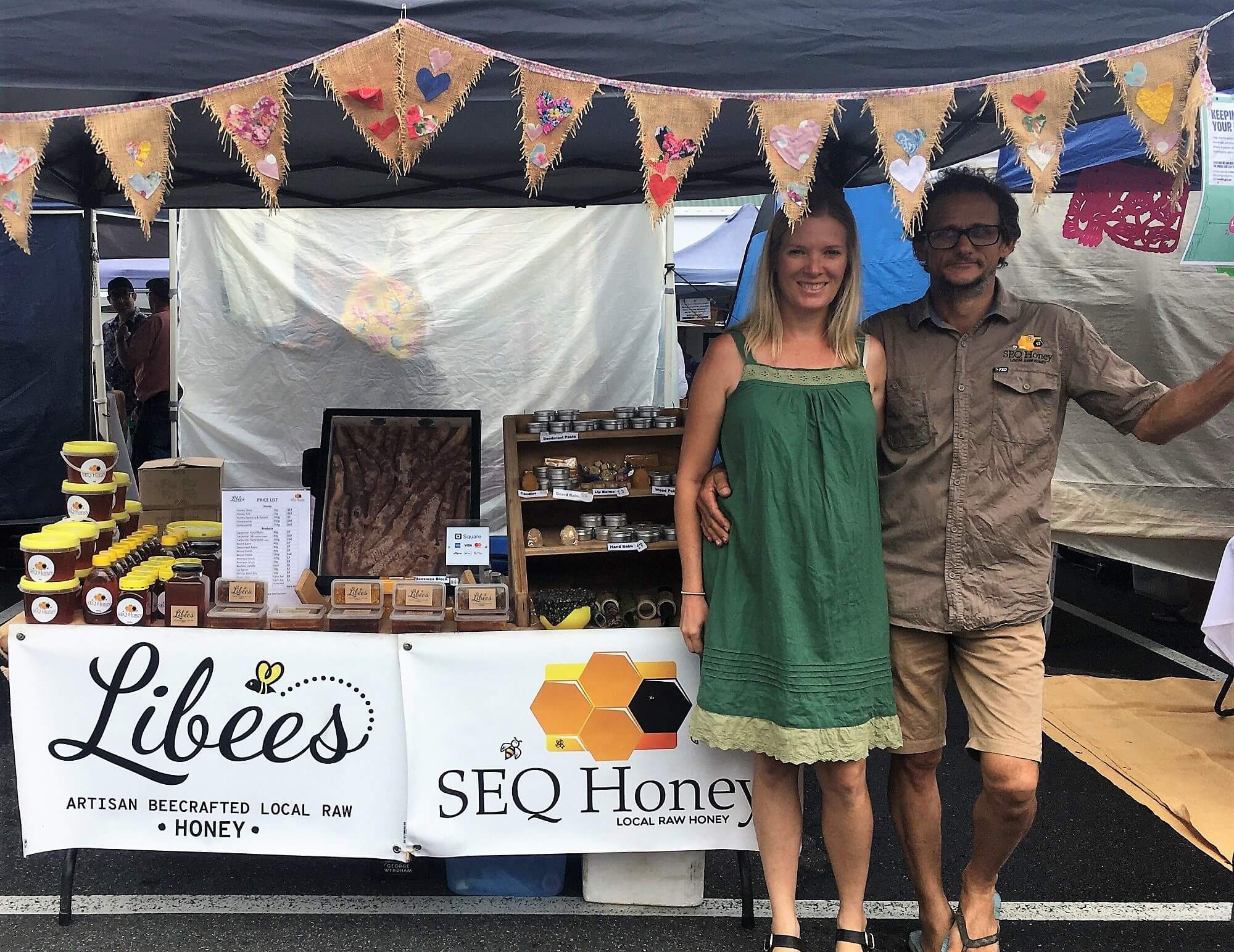
Meet Liby, the self-described “Chief Honey Officer” behind Libees Honey.
From Backyard Hobby to 200 Hives
Liby grew up on Highcrest Ave and started the beekeeping journey in 2017 with hives in Mums backyard, even though it’s her mums honey sign out the front and honey distribution cupboard that still stands — and that family connection has unexpectedly turned Highcrest Avenue into something of a local honey hub.
By day, Liby and her partner Craig run their honey operation from a farm north of Gympie, managing more than 200 hives across the area.
Meanwhile, Liby’s mum helps distribute the honey from her Wavell Heights home. At one point, every drum was full from the prolific production of the hives and the local response from a recent leaflet drop across just three Wavell Heights streets created a run on the honey, just in time to create space for another incoming batch.
At around $14 a kilogram for raw honey, locals clearly see value not just in the product itself, but in knowing exactly where it comes from, making Libees Honey one of the suburb’s quiet success stories.

Learning the Hard Way
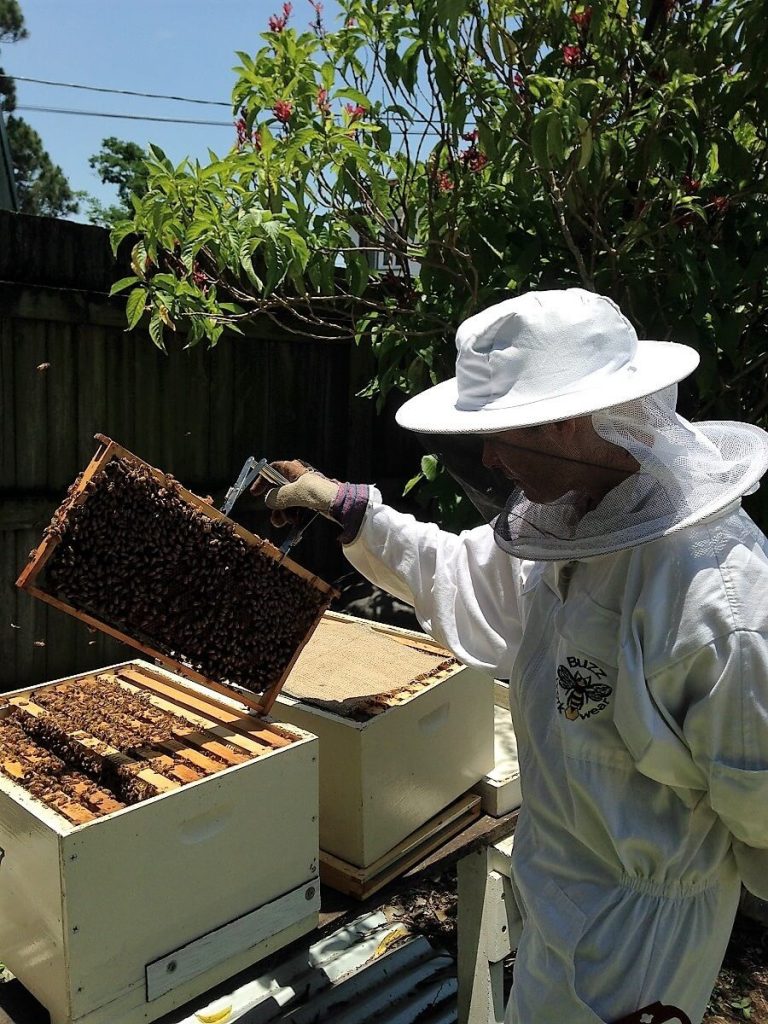
Liby’s beekeeping journey started in 2016 with a backyard FlowHive and a determination to learn properly before diving in.
She joined the Northside Beekeepers Association at Lawnton, where she says experienced mentors became invaluable.
“The ancient art of mentoring was the real gold in the raw honey,” she says.
Over time, Liby worked with many retired commercial operators, absorbing knowledge from seasoned producers while building the confidence to eventually launch her own operation.


But the learning curve was steep.
By her own admission, she “killed her first hive” due to American Foul Brood.
Rather than discouraging her, the experience deepened her respect for the complexity of bees and the importance of ongoing education.
Today, she encourages hobby beekeepers to connect with local clubs rather than trying to learn everything online or in isolation.

“It’s amazing to me that many backyard beekeepers don’t join local beekeeping clubs,” Liby says.
“There’s so much knowledge to acquire, especially with new issues like Varroa mite.”
Varroa Mite: Tiny Pest, Big Headache
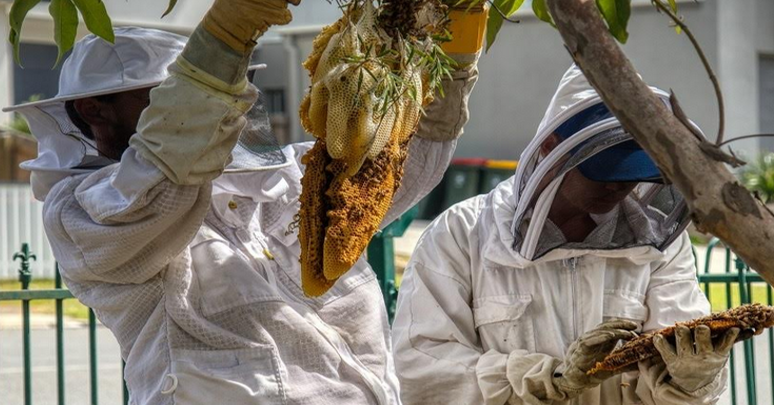
One of the biggest concerns currently facing Australia’s bee industry is the spread of the Varroa mite — a parasite considered one of the most serious threats to honey bees worldwide.
Liby says unregistered backyard hives can create challenges for the industry because owners may miss critical updates or treatment advice designed to limit the spread.
Bees can travel up to five kilometres, meaning unmanaged infestations can quickly impact nearby registered hives and commercial operations.
For small producers like Liby and Craig, staying informed and connected to the wider beekeeping community is becoming increasingly important.
A Different Kind of Family Business
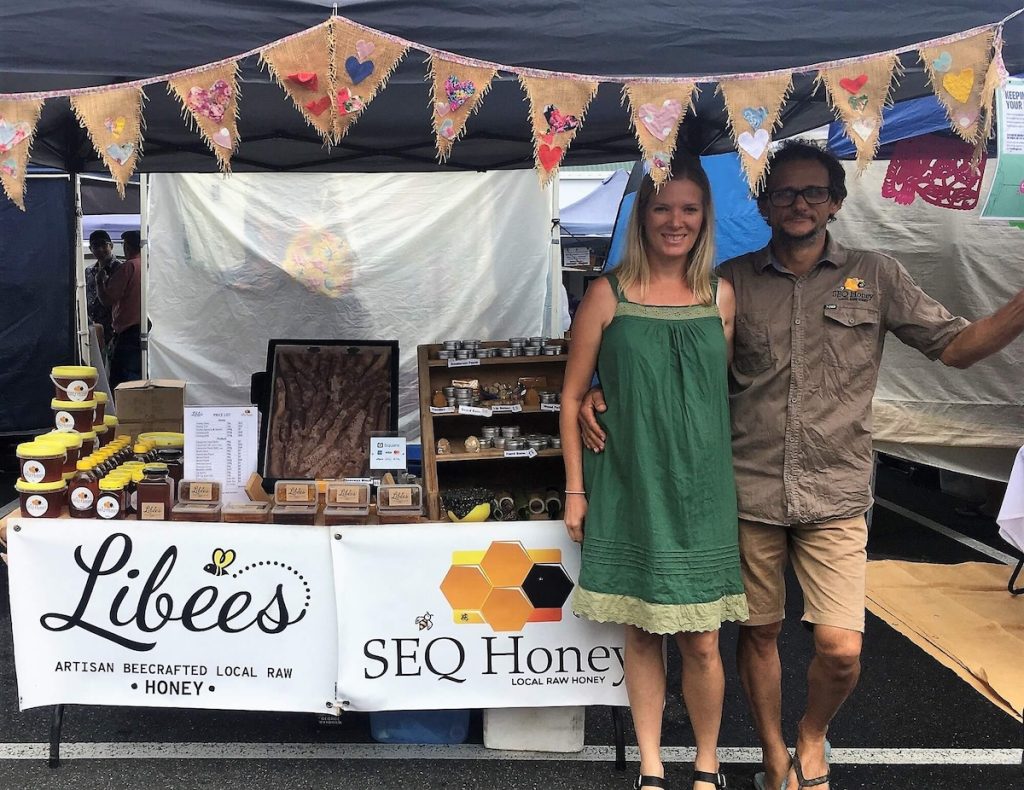
Liby met Craig in 2018, and together they slowly traded suburban life for a more nature-connected existence.
At one point, Craig had 24 hives squeezed into the backyard of his small North Lakes property before council pressure eventually pushed him to relocate. This was a trigger for the move with Liby.
So they packed up and moved north, buying land near Gympie to build a new lifestyle around bees, sustainability and local food production.
Today, their hives are spread not only across their own property, but also across friends’, family members’ backyards and paddocks, and National Park sites. Craig runs a successful queen bee producer arm of the business focusing on creating a very dark calm bee displaying uncapping and recapping behaviour traits that they are hoping will contribute to faster varroa resistant genetics being spread across the region.
“We believe supporting a local beekeeper where you know your honey is coming from — from bees that are probably sitting on your garden flowers — supports the continuation of small local family-run businesses over big corporations and supports the environment on a micro scale,” Liby says.
“And it tastes better.”
Their business also incorporates a strong sustainability focus, including off-grid solar power for honey extraction, reused packaging materials, Australian-made signage and even hive boxes crafted from camphor laurel trees milled on their own property.
A New Monthly Column for Wavell Heights News
Liby will now be sharing her world with readers through a new monthly column for Wavell Heights News.
Expect stories from behind the hives, insights into bee behaviour, seasonal honey updates, environmental challenges, backyard beekeeping tips and a closer look at the fascinating — and often misunderstood — world of bees.
Like the bees she cares for, Liby has built her honey business the old-fashioned way — through patience, hard work and a whole lot of persistence.
Published 5-June-2026