


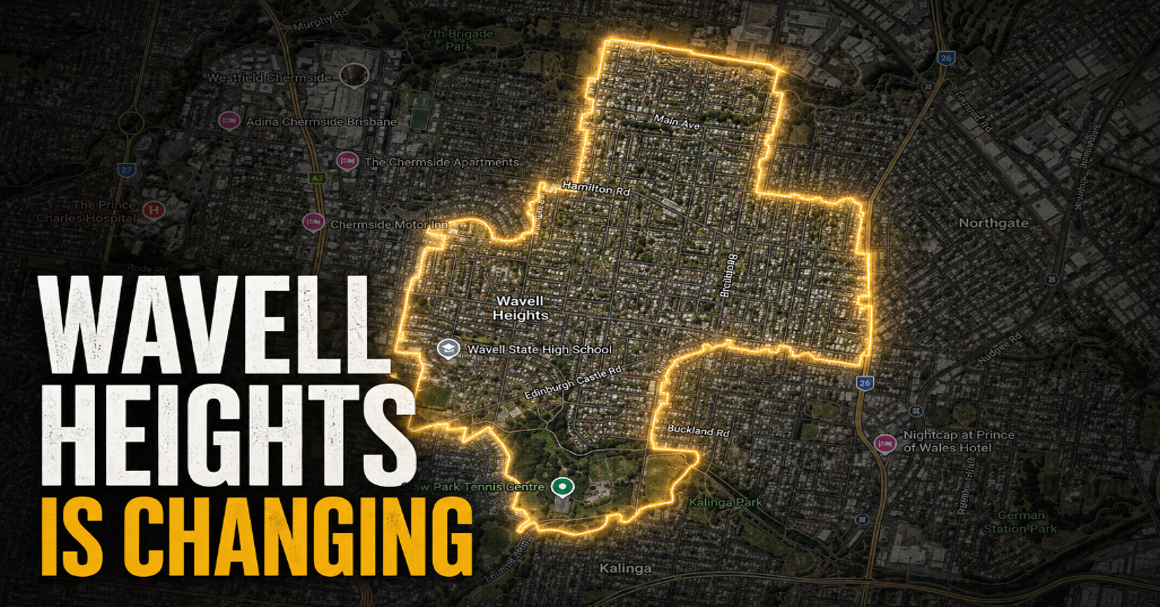
Wavell Heights is changing one property at a time. Large blocks are being split, older homes are being rebuilt or extended, and new housing proposals are steadily reshaping its residential streets.
Brisbane City Council’s Development.i records show 41 development applications lodged in Wavell Heights in the 12 months to 10 August 2026, plus 83 building referral applications, most involving design and siting.
The figures should not simply be added together — one property can generate more than one application — but they point to steady, small-scale change across the suburb.
The Blocks Being Split
Seven development applications lodged over the past 12 months involved subdivision of land, including properties in Brae Street, Ferguson Road, Handcroft Street, Taylor Street, Beeby Street and Rode Road.

Another proposal at 90 Newman Road combines subdivision with a dual-occupancy development.
Several were still in progress when the Development.i records were downloaded, including 35 Brae Street, 1 Ferguson Road and 90 Newman Road.
From Sale to Subdivision in Two Months
The property at 35 Brae Street provides a particularly clear example of the change.
The 810sqm property had reportedly been held by the same owners for more than 30 years before being sold to a developer on 20 May 2026.
According to Place Ascot agent Nick Moloney, who handled the sale, 80 per cent of interest in the property came from builders and developers, although it also attracted family buyers looking to build a new home.
Just over two months later, on 24 July, a development application was lodged with Brisbane City Council to subdivide the property.

That application was still in progress when the Development.i records were downloaded.
The sequence — a long-held large block changing hands and then moving towards subdivision — is a snapshot of the broader transition occurring across Wavell Heights.
A Trend, Not a Boom
Subdivision activity is significant, but it is not at a record high.
There were 10 subdivision applications in the preceding 12 months, compared with seven in the latest period. Earlier annual totals were three in 2020–21, six in 2021–22, five in 2022–23 and five in 2023–24.
Wavell Heights Subdivision Applications
| 12-Month Period | Applications |
|---|---|
| 2020–21 | 3 |
| 2021–22 | 6 |
| 2022–23 | 5 |
| 2023–24 | 5 |
| 2024–25 | 10 |
| 2025–26 | 7 |
Source: Brisbane City Council Development.i. Each period runs from 11 August to 10 August.


The picture is less a sudden boom than a pattern of redevelopment that has become more visible over the past two years.
Why the Big Blocks Matter
Wavell Heights still has many of the generous residential lots that once defined Brisbane’s middle-ring suburbs.
A previous Wavell Heights News analysis of 224 house sales with available land-size data found a median block size of 607 square metres, with 100 sales on blocks between 600 and 700 square metres.
Not every large block can be subdivided, but sites of that size can offer options that are harder to find in newer suburbs built around smaller lots.

The interest in 35 Brae Street illustrates the point: one block attracted both families wanting the land for themselves and developers looking at what could be created from it.
Big Blocks, Big Prices
Recent sales show the value attached to that land.
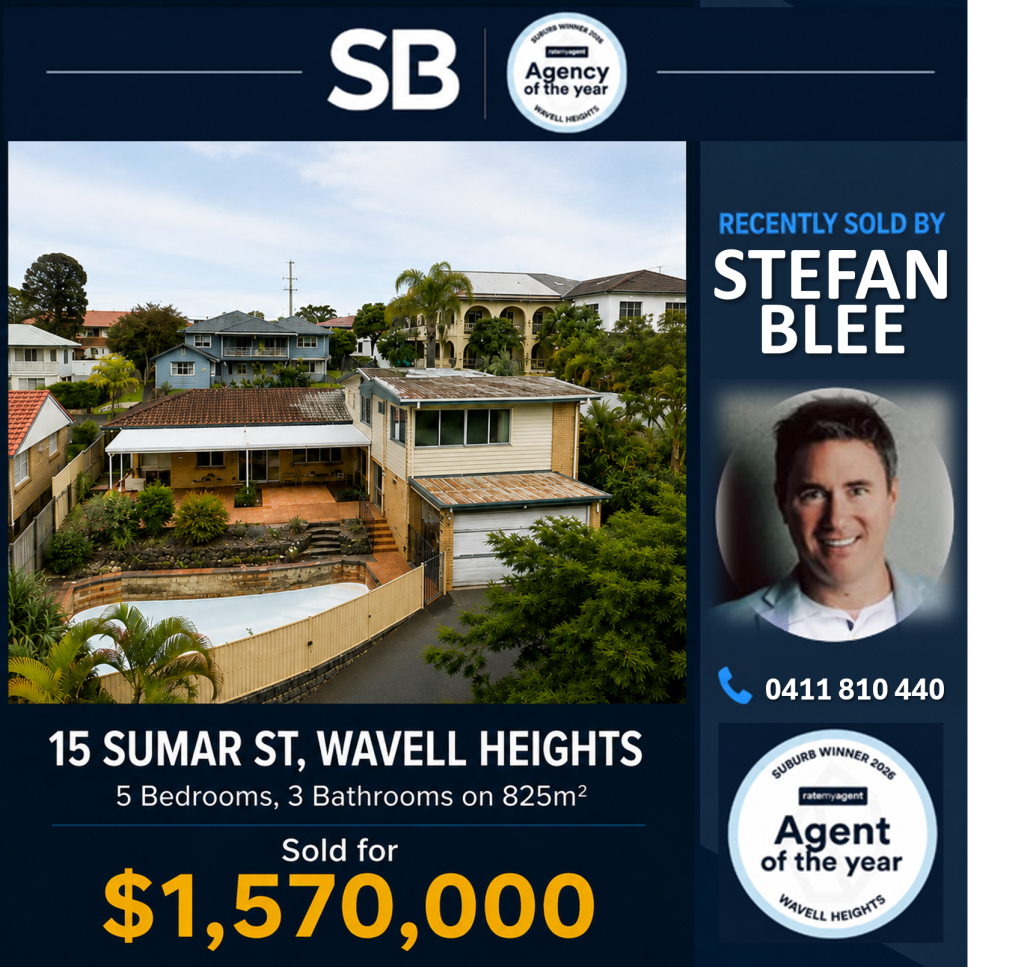
Seven of the 10 highest publicly disclosed house sales in Wavell Heights during the three months to 11 August were on blocks larger than 600sqm.
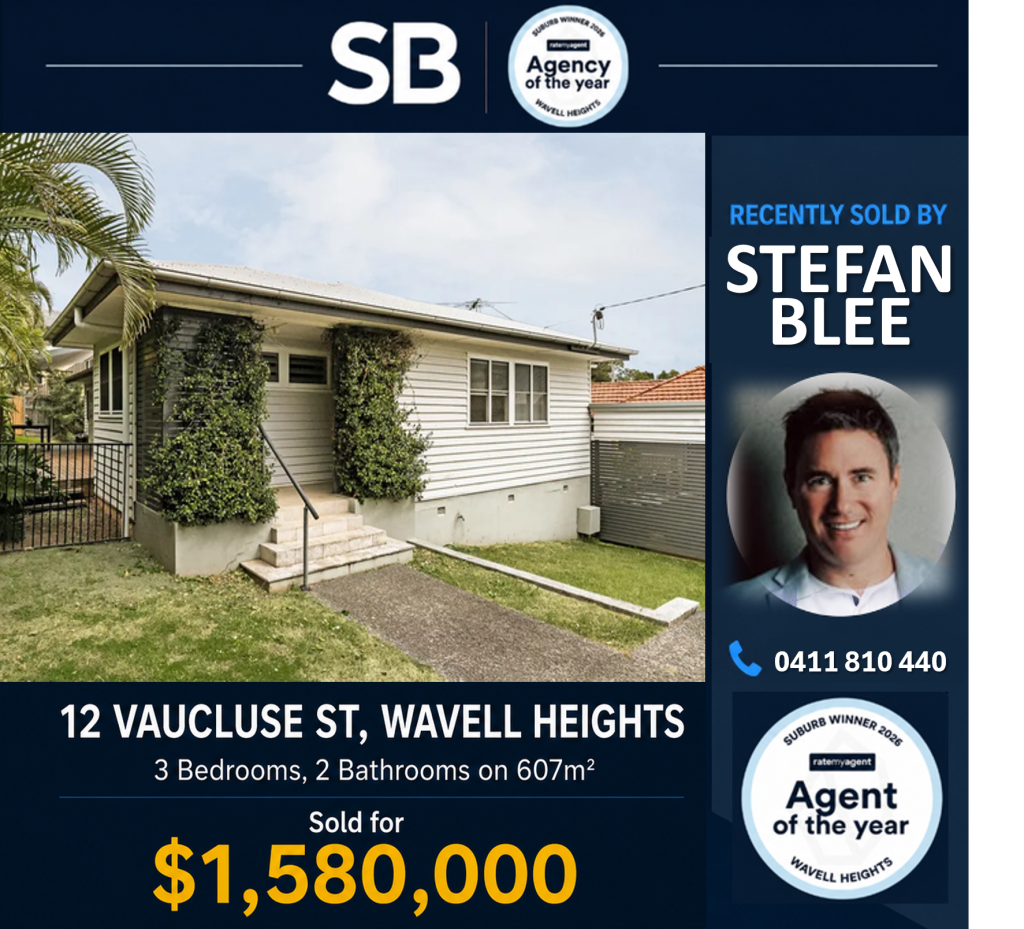
The top three were 1 Luke Street at $3.45 million on 622sqm, 27 Abbey Street at $3.3 million on 635sqm, and 19 Vaucluse Street at $3.2 million on 617sqm.
Smaller sites are also attracting strong prices. A home at 30 Roderick Street sold for $2.605 million on 428sqm, while 5 Kotara Street fetched $2 million on 324sqm.
That contrast helps explain the redevelopment equation: large blocks remain valuable, while newer housing on smaller lots can also command a premium.
Top 10 Wavell Heights House Sales — Past Three Months
| # | Address | Sale Price |
Lot Size (sqm)
Lot Size (sqm) |
|---|---|---|---|
| 1 | 1 Luke St | $3,450,000 | 622 |
| 2 | 27 Abbey St | $3,300,000 | 635 |
| 3 | 19 Vaucluse St | $3,200,000 | 617 |
| 4 | 9 Luke St | $2,900,000 | 708 |
| 5 | 48 Stadcor St | $2,825,000 | 647 |
| 6 | 30 Roderick St | $2,605,000 | 428 |
| 7 | 7 Highcrest Ave | $2,290,000 | 751 |
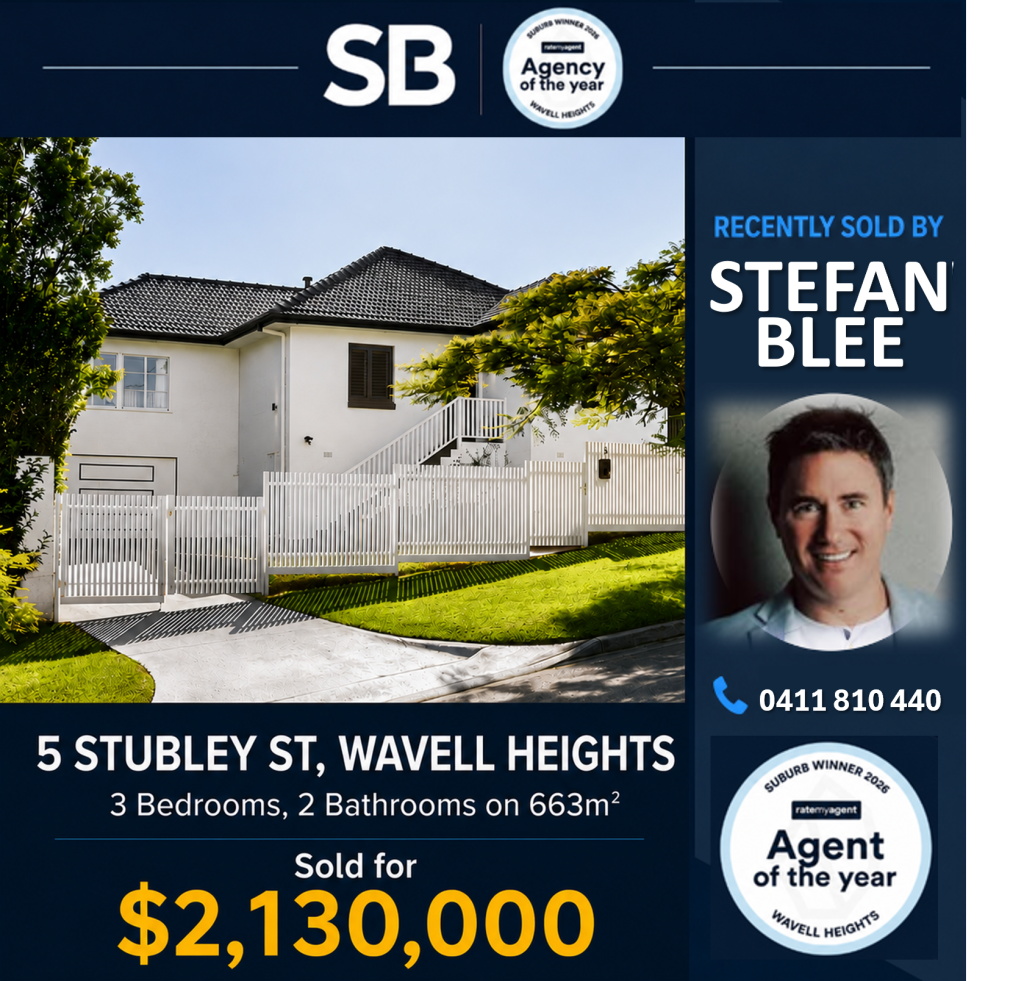
| 8 | 5 Stubley St | $2,130,000 | 663 |
| 9 | 5 Kotara St | $2,000,000 | 324 |
| 10 | 107 Rode Rd | $1,820,000 | 913 |
Top 10 publicly disclosed house sales in Wavell Heights during the three months to 11 August 2026. Rankings are based on publicly reported sale prices available at the time of publication. Sales where the price was withheld or had not been publicly disclosed as of press time are excluded.
Change Beyond Subdivision
Subdivision is only part of the story.
Development.i records also show applications for extensions, alterations, new dwellings and other residential work. Current proposals include a multi-unit dwelling application at 44 Julia Street and a dwelling-house proposal at 15 Palomar Parade.
Separate building records show design-and-siting referrals across streets including Hubbard Street, Watcombe Street, Zeehan Street, Aveling Street and Rode Road.
None of these projects changes Wavell Heights overnight. But together, they are reshaping it street by street.
One Property at a Time
Wavell Heights is not being transformed by towers or a master-planned precinct.
Its change is quieter: one subdivision, rebuild or extension at a time.
The suburb’s larger blocks and older housing stock remain part of its identity, but properties such as 35 Brae Street show how quickly a long-held block can become part of the next generation of housing.
From a distance, Wavell Heights may still look much as it always has.
At street level, though, the transformation is already underway.
Published 11-August-2026