




By Cathy Brand | Fire Safety Advocate and CEO of Brooks Australia
Most of us wouldn’t buy a new refrigerator without comparing its features, or choose a home security system without asking how it works. Yet when it comes to smoke alarms, many people assume that one white device on the ceiling is much like another.
With Queensland’s final smoke alarm compliance deadline approaching on 1 January 2027, homeowners are being asked to make decisions about equipment they may only purchase once every decade.
It’s an opportunity to understand what we’re actually putting into our homes.

At Brooks, we work with different smoke detection technologies, and one thing I’ve learnt is that the questions people ask before buying can be just as important as the product they eventually choose.
The starting point is understanding what the law requires, and where homeowners have choices beyond those minimum requirements.
Why Photoelectric Detection Matters
Queensland’s smoke alarm legislation requires photoelectric alarms that comply with Australian Standard AS 3786–2014 and do not contain an ionisation sensor.
Photoelectric alarms use light within a sensing chamber to detect smoke particles. They’re particularly effective at identifying the smoke associated with smouldering fires, which can develop before flames become obvious.
But an alarm’s sensing technology is only part of the picture.
Queensland also requires the prescribed alarms throughout a home to be interconnected. When one alarm detects smoke, the others sound too, alerting people who may be asleep or in another part of the house.

The legislation specifies where alarms must be installed, including bedrooms, relevant hallways and each storey. It also sets requirements for power supply, testing and replacement.
These are not optional extras or features that manufacturers can substitute with something else. They’re the foundation of a compliant household smoke alarm system.

What Happens When an Alarm Has More Than One Sensor?
Not every fire develops in the same way. Some produce substantial smoke before temperatures rise significantly, while others develop more rapidly.
This is one reason manufacturers have continued to develop different approaches to fire detection.
Multi-sensor alarms combine information from more than one sensing element. In Brooks’ residential range, for example, the EiB660iRF combines photoelectric smoke sensing with a heat sensor.


The alarm uses information from both sensors to assess developing fire conditions. It’s a different approach from relying on a photoelectric sensing chamber alone.
For homeowners comparing products, that’s worth understanding, but it shouldn’t be confused with a legal requirement.
Queensland does not require households to purchase multi-sensor smoke-and-heat alarms. A suitable, correctly installed and interconnected single-sensor photoelectric alarm can meet the legislation.
Multi-sensor technology offers another option for people considering the features available in a modern alarm system.

I think the distinction matters because homeowners should be able to make an informed decision without feeling pressured to purchase technology the law doesn’t actually require.
When an Alarm Sounds for the Wrong Reason
One of the frustrations people sometimes encounter with smoke alarms is an activation when there’s no fire.
Dust, insects, environmental conditions and installation problems can all contribute to unwanted alarms. They can be particularly troublesome when a device is ageing or has not been maintained properly.
The danger is that repeated nuisance activations can encourage people to silence, disconnect or otherwise interfere with an alarm. That can leave a household without the warning system it needs.
Manufacturers have responded by developing features intended to help manage these problems.
Some Brooks alarms, for instance, incorporate automatic dust compensation. This allows the device to account for gradual changes in its sensing chamber as dust accumulates over time. The EiB660iRF also includes an insect screen and a chamber design intended to reduce nuisance activations.
These are useful features to consider, but no smoke alarm should be treated as maintenance-free.
Regular testing, cleaning and replacement remain essential, regardless of the technology inside the device.
READ ALSO:
- The Deadline Is Coming: Is Your Home Ready for Queensland’s Smoke Alarm Rules?
- Our Homes Have Changed. Have Our Fire Safety Habits Kept Up?
The System Matters as Much as the Alarm
A homeowner might find an alarm with impressive specifications, only to discover that it isn’t compatible with the other devices already installed.
That’s why I encourage people to think about the complete system rather than buying individual alarms in isolation.
Interconnection can be achieved through compatible wired or wireless arrangements. However, wireless capability doesn’t mean every brand or model will automatically communicate with another.
A ten-year sealed battery also needs to be understood correctly. It removes the need for routine battery replacement, but doesn’t remove the need to test and maintain the alarm or replace the unit when required.
There’s another distinction worth understanding: a mains-powered smoke alarm with battery backup is still a hardwired alarm. It isn’t the same as an alarm powered entirely by a sealed ten-year battery.
For homeowners comparing their options, the following examples from Brooks Australia’s residential range illustrate how products can differ in detection technology, power supply and interconnection features.
Mains-Powered Smoke Alarms: Understanding the Options
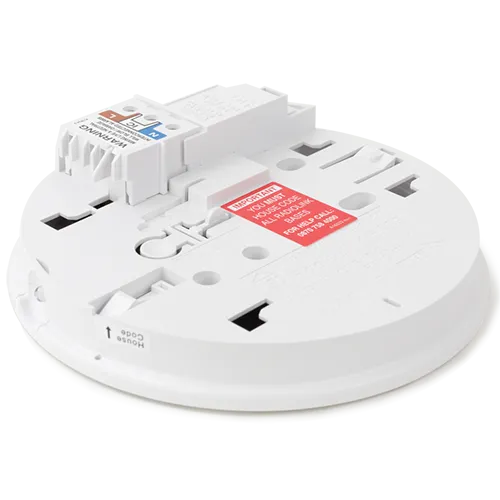
Mains-powered smoke alarms connect to the household electrical supply and use a backup battery to maintain operation during a power interruption. Different models offer different sensing technologies and backup arrangements.
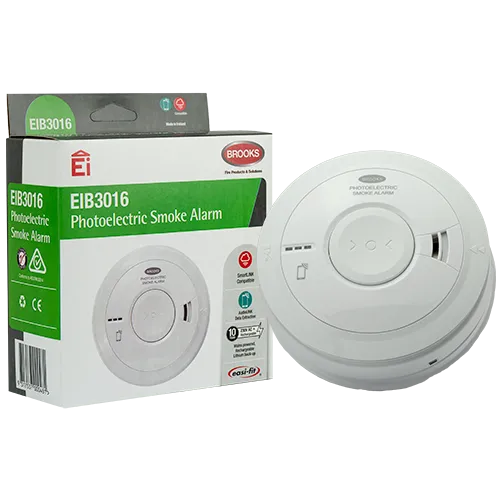
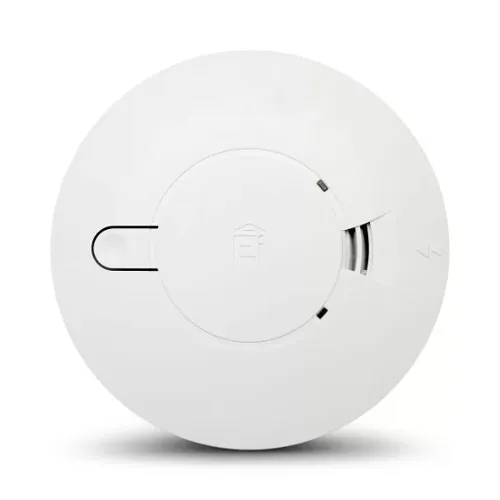
Photoelectric 230V smoke alarm with 10-year lithium battery backup.
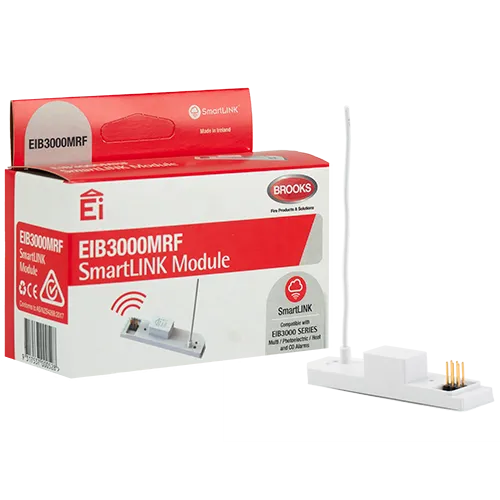
Wireless interconnection available with EIB3000MRF accessory.
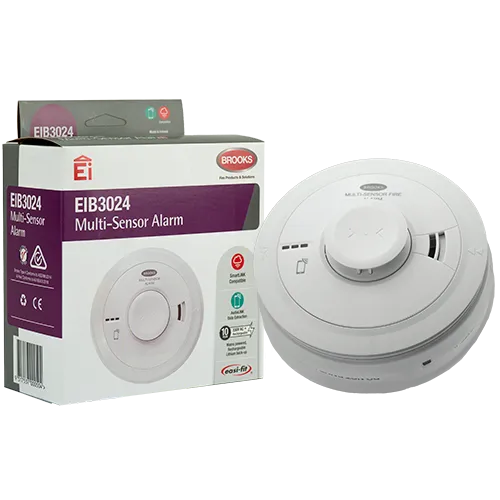
Photoelectric and heat multi-sensor 230V alarm with 10-year lithium battery backup.
Wireless interconnection available with EIB3000MRF accessory.
 Click here to find out more
Battery-Powered Smoke Alarms: Understanding the Options
Where permitted for the property, photoelectric alarms powered by non-removable ten-year batteries offer an alternative to mains-powered models. Wireless interconnection features vary, so buyers need to check how each alarm communicates with the rest of the system.
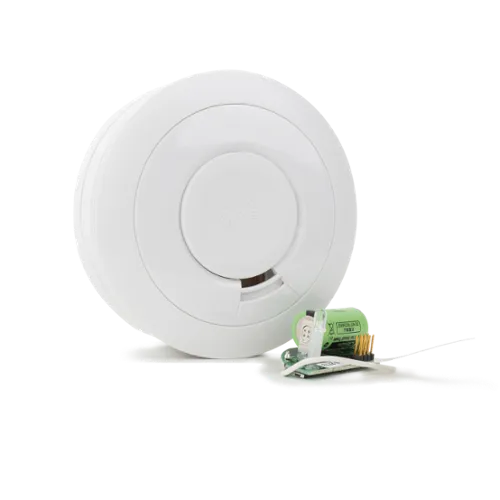
Photoelectric smoke alarm with sealed 10-year lithium battery.
RadioLINK+ wireless interconnection built in.
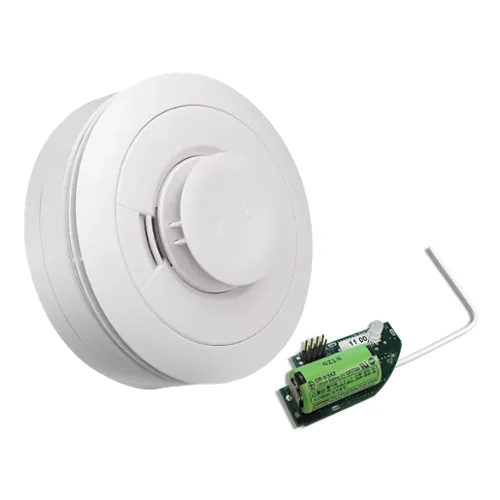
Photoelectric and heat multi-sensor alarm with sealed 10-year lithium battery.
RadioLINK+ wireless interconnection built in.
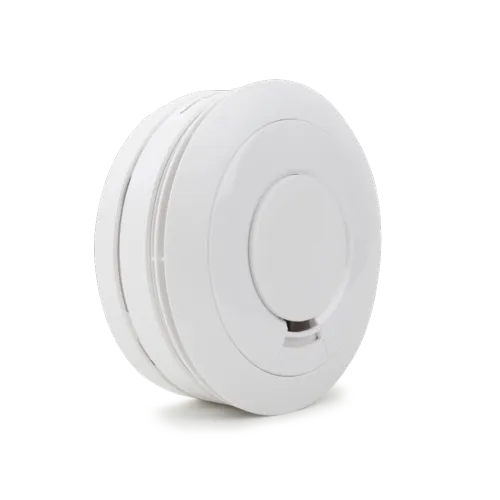
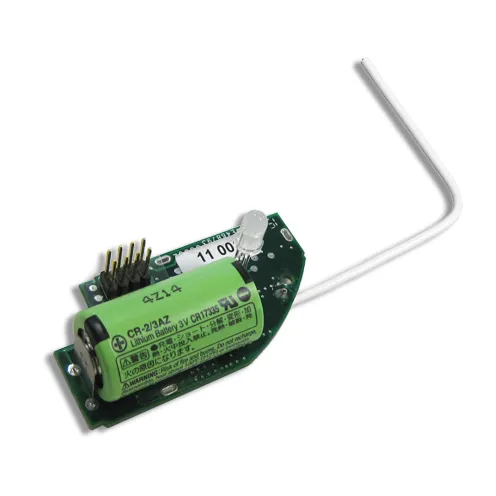
Photoelectric smoke alarm with sealed 10-year lithium battery.
Wireless interconnection requires the compatible EIB600MRF module (sold separately).
Click here to find out more DIY or Professional Installation: Which Is Right for Your Home?
Choosing the right smoke alarm is only part of the decision. Homeowners also need to consider how the alarms will be installed, whether they’ll work together and what documentation they should keep once the work is completed.
In Queensland, electrical work involving 240V hardwired smoke alarms must be undertaken by a licensed electrician. Existing hardwired alarms must also be replaced with compliant hardwired models rather than battery-only alternatives.
Where battery-powered alarms are permitted, homeowners can generally install them themselves, provided no electrical work is involved. However, the alarms must still meet Queensland’s prescribed placement distances, interconnection and installation requirements.
Professional installation may be worth considering for larger homes, properties with unusual layouts or households upgrading an existing alarm system. A suitably qualified installer can assess the property, recommend compatible products, position the alarms correctly and check that the completed system operates as intended.
Another consideration is the documentation provided after installation.
For relevant hardwired electrical work, a licensed electrical contractor must provide the applicable electrical certificate of testing and compliance. Professional smoke alarm installers may also provide a separate installation report or statement recording the work performed, the alarms installed and the testing undertaken.
These documents are worth keeping with the home’s important records. They may be useful when responding to an insurance enquiry, demonstrating what work was undertaken or preparing documentation for a future property sale.
However, an installation report isn’t necessarily a statutory compliance certificate, and neither document automatically guarantees insurance coverage or satisfies every obligation associated with selling a property.
For homeowners choosing DIY installation, the responsibility for meeting the applicable requirements remains the same. The decision ultimately comes down to the type of system being installed, the complexity of the property and the homeowner’s confidence in completing the work correctly.
What Would I Ask Before Buying?
If I were comparing smoke alarms for my own home, I would begin with the practical questions.
Does the alarm meet Queensland’s requirements? Will it work with the other alarms in the house? Is its power supply appropriate for the existing installation? How will it be tested and maintained?
I’d also want to understand any additional features being offered, whether they’re designed to address a particular concern and whether they make sense for that household.
There isn’t necessarily one answer that suits every home.
For some families, a straightforward interconnected photoelectric system will be entirely appropriate. Others may want to explore multi-sensor technology or additional features that help with monitoring and maintenance.
The important thing is to make those decisions with a clear understanding of what is required, what is optional and what each product is designed to do.
A smoke alarm may be a small purchase compared with other household equipment, but the role it plays is anything but small. Taking a little time to understand the technology is a sensible investment in the safety of the people living beneath it.

Home Fire Safety with Cathy Brand is a five-part sponsored editorial series presented in partnership with Brooks Australia.
Editor’s Note: All smoke alarms shown are specified by Brooks Australia as conforming to AS 3786:2014. Compliance with Queensland’s smoke alarm requirements also depends on appropriate power supply, installation, positioning and interconnection. Wireless accessories may be required depending on the model and system configuration.