


Why Your Jar of Australian Honey Is Becoming More Precious

Your jar of honey might look no different today than it did a year ago. Behind it though, Australian beekeeping is going through one of its biggest changes in generations.

Varroa mite is now established in South East Queensland, making it harder and more expensive for beekeepers to keep hives healthy and productive.

At Libees Honey, the impact is already being felt. One complete apiary site has collapsed following Varroa infestation, while the mite was detected at the family’s breeding site in Gympie in July.

The challenge has shifted from preparing for Varroa to living with it.

Varroa Doesn’t Destroy the Honey

Varroa doesn’t destroy the honey itself. It damages the colonies that produce it.

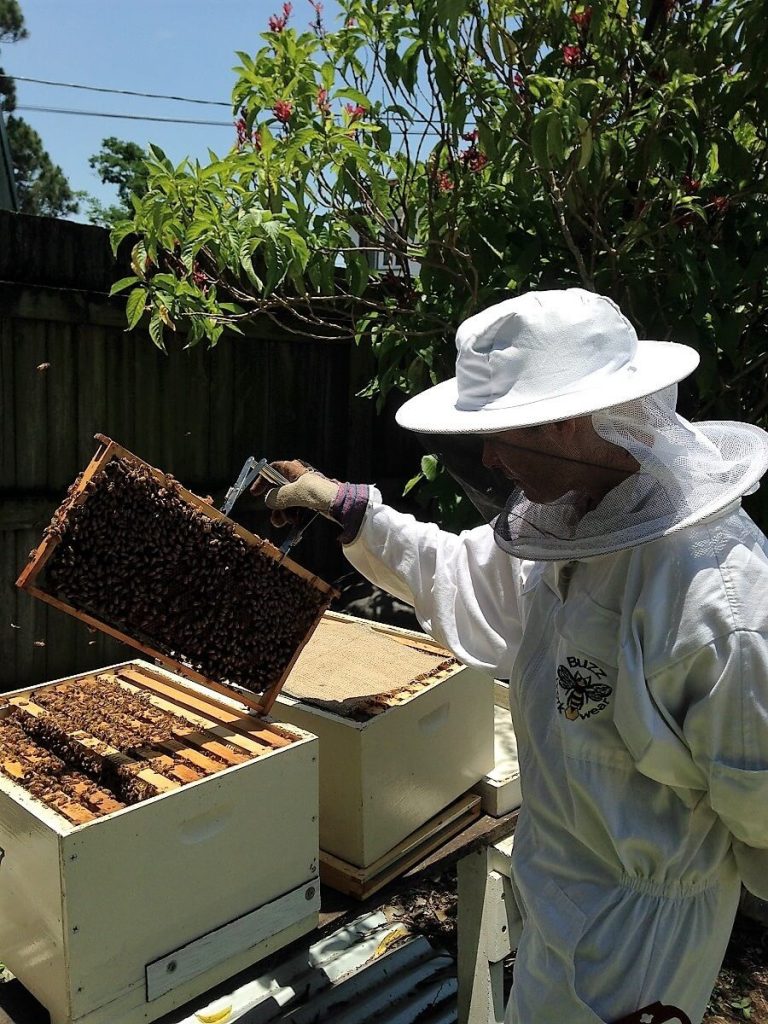
The mites reproduce in honey bee brood cells, weakening bees and helping spread viruses. Without effective management, they can severely weaken or kill a colony.

Making matters harder, Queensland authorities have confirmed resistance to several commonly used Varroa treatments in South East Queensland. Beekeepers are being advised to regularly monitor mite levels, check whether treatments remain effective and use an integrated pest management approach.

That means more time, intervention and expense simply to keep hives productive.

Varroa — The Numbers

10.5%
Australia’s annual colony loss rate in 2024–25, up from 6.8% the previous year.

$19,590
Average 2025 operational cost of Varroa management reported by surveyed commercial beekeepers affected by the mite.

1,380 hives
Number NSW Apiarists’ Association president Matt Skinner says one beekeeper lost in 12 weeks, with the loss estimated at $1.2 million.

Sources: Australian Colony Loss Survey 2025; NSW Apiarists’ Association.

View the Australian Colony Loss Survey 2025 Report here.

More Than a Jar of Honey

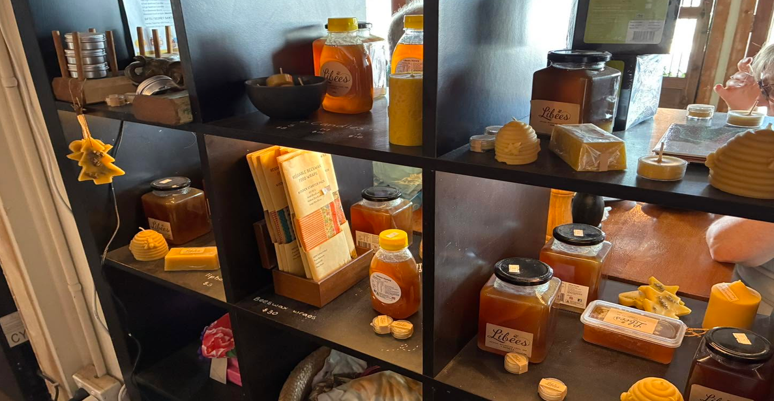
For the past eight years, Liby’s mum has kept what the family calls a “honey cupboard” — not a shop — stocked with honey and honeycomb alongside beeswax products including balms, food wraps and candles.
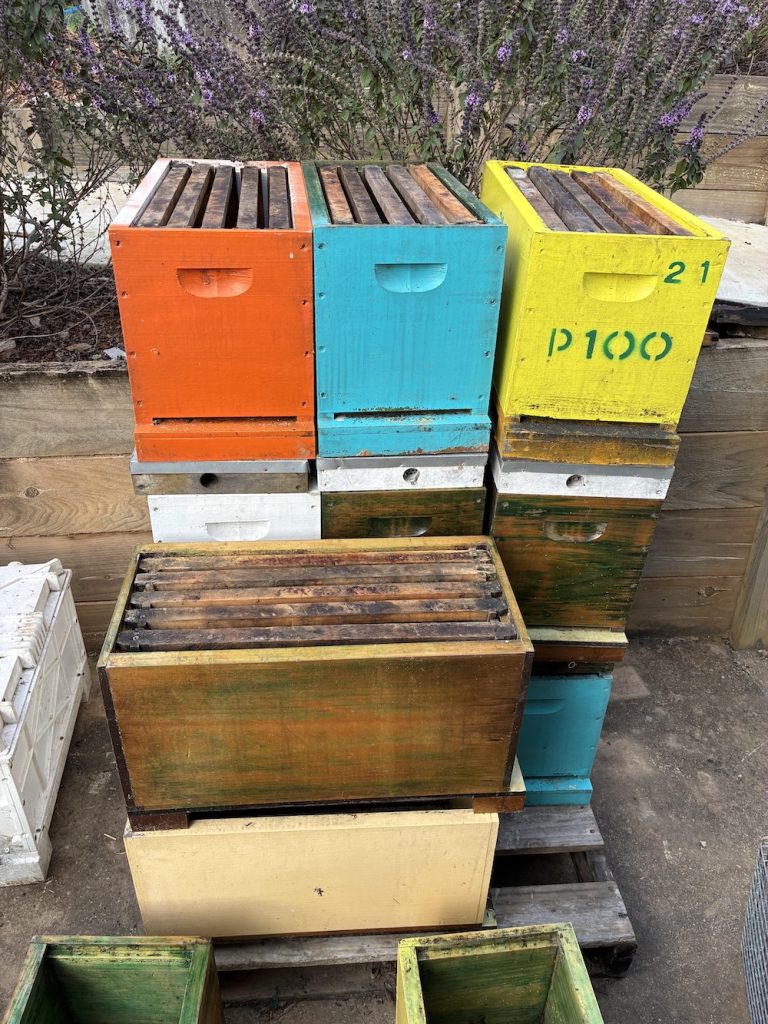
Photo Credit: Supplied

It’s a small reminder that what comes from a healthy hive extends well beyond a jar of honey.

Bees can forage several kilometres from their hive for nectar. At the Libees farm in Gympie, a strong flowering of nearby macadamia trees can see them fill 10 frames in as little as two days; with scattered spring flowering, it can take around three weeks.

Back at the hive, the nectar is deposited into cells and fanned until its moisture content falls to around 17 per cent. The bees then cap the cells with wax, ready for harvesting.

Varroa threatens the workforce behind that entire process.


Can Bees Be Bred to Cope Better?

The pressure is also reaching queen breeders. Libees Honey is now the last of three queen producers in the Gympie area still operating.

That makes the longer-term question increasingly important: can bees be bred to cope better with Varroa?

Research published in 2022 examined Varroa resistance in Cuba, home to an estimated 220,000 European honey bee colonies that had survived for more than two decades without routine Varroa treatment.

Researchers examined behaviours associated with Varroa resistance, including “recapping”, where worker bees open and subsequently reseal capped brood cells. Higher recapping rates were associated with Varroa-resistant populations, particularly in cells infested with the mite.
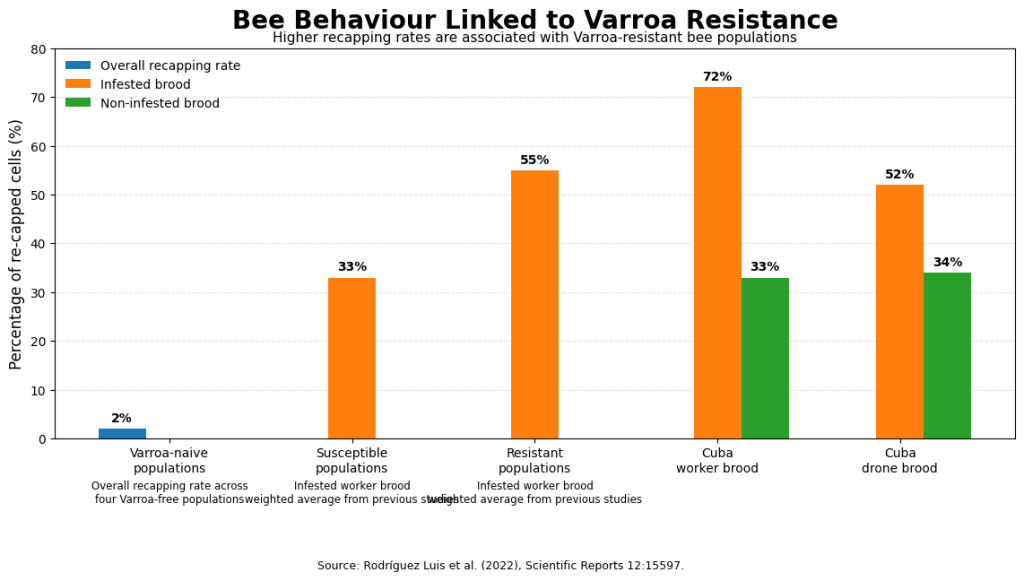
Recapping rates reported for Varroa-naive, susceptible and resistant bee populations, including Cuban worker and drone brood. Source: Rodríguez Luis et al. (2022), Scientific Reports 12:15597.

Libees’ breeding program in Gympie is drawing on lessons from this research, with a particular interest in darker bee genetics and behavioural traits associated with Varroa resistance.

Australia has traditionally favoured Italian honey bees, valued in part for their relatively calm temperament, but Libees believes greater emphasis will now need to be placed on selecting bees for their ability to cope with Varroa.

Developing and spreading useful genetic traits, however, takes generations.

Want to Support Australian Beekeepers? Read the Label

For consumers, one of the simplest ways to support Australian honey producers is to check where their honey comes from.

Honey is classified as a priority food under Australia’s country-of-origin food labelling rules, meaning packaged honey must carry country-of-origin information.

Honey sold on an Australian supermarket shelf isn’t necessarily made entirely from Australian honey. For shoppers who want to support Australian producers, the country-of-origin label is an easy place to start.

That choice may become increasingly important as Varroa adds to the cost and complexity of producing honey locally.

Getting Ready for Spring

Despite the upheaval, the seasonal work continues.

August at Libees means scraping old frames, cleaning boxes and rendering wax ready for spring hive growth, as well as restocking packaging and filling supplier orders.

Soon the trees will flower and the bees will begin working the nectar flows again.

The difference now is how much more work may be required to keep enough healthy bees there to do it.

Published on 24-August-2026

Editor’s Note: Written in consultation with Libees Honey.
Meet the Woman Behind Wavell Heights’ Favourite Honey

Did you know Queensland’s honey bee industry contributes an estimated $2.4 to $2.9 billion to the state economy every year?

More than 100,000 managed hives help pollinate Queensland crops annually, supporting everything from macadamias and avocados to berries, melons and seed crops. Without bees, many of the foods Queenslanders take for granted would simply not exist at the same scale.

Yet for most people, bees are still mainly associated with one thing: honey.


From Backyard Hobby to 200 Hives

Liby grew up on Highcrest Ave and started the beekeeping journey in 2017 with hives in Mums backyard, even though it’s her mums honey sign out the front and honey distribution cupboard that still stands — and that family connection has unexpectedly turned Highcrest Avenue into something of a local honey hub.

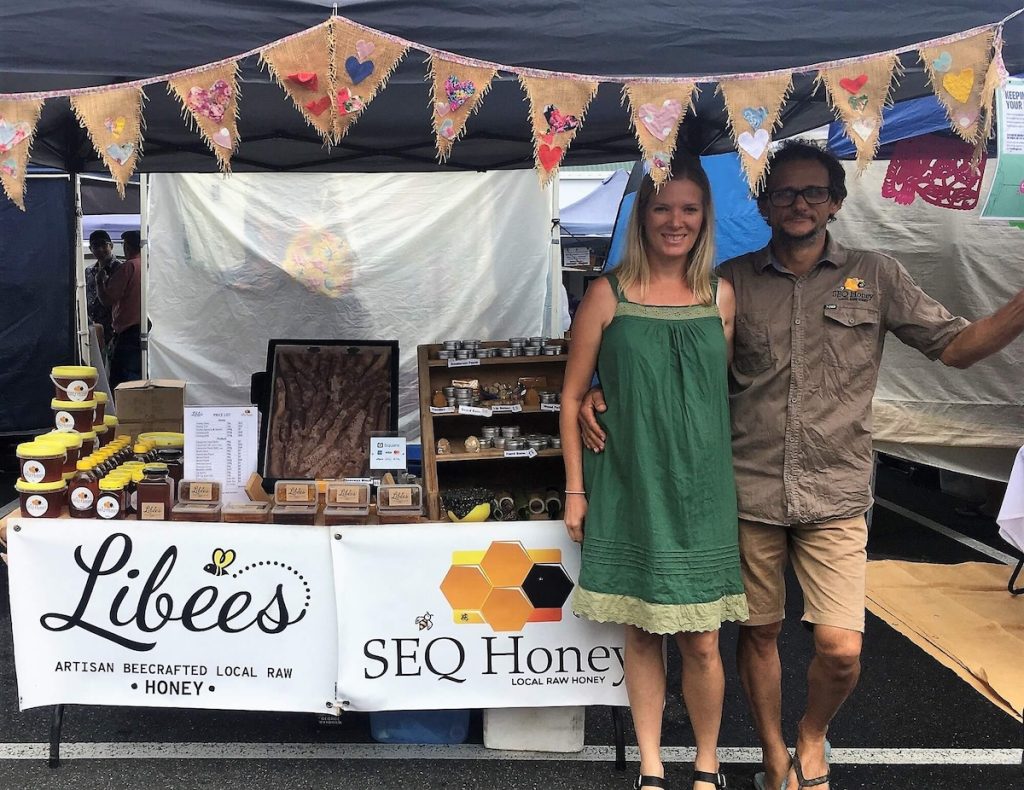
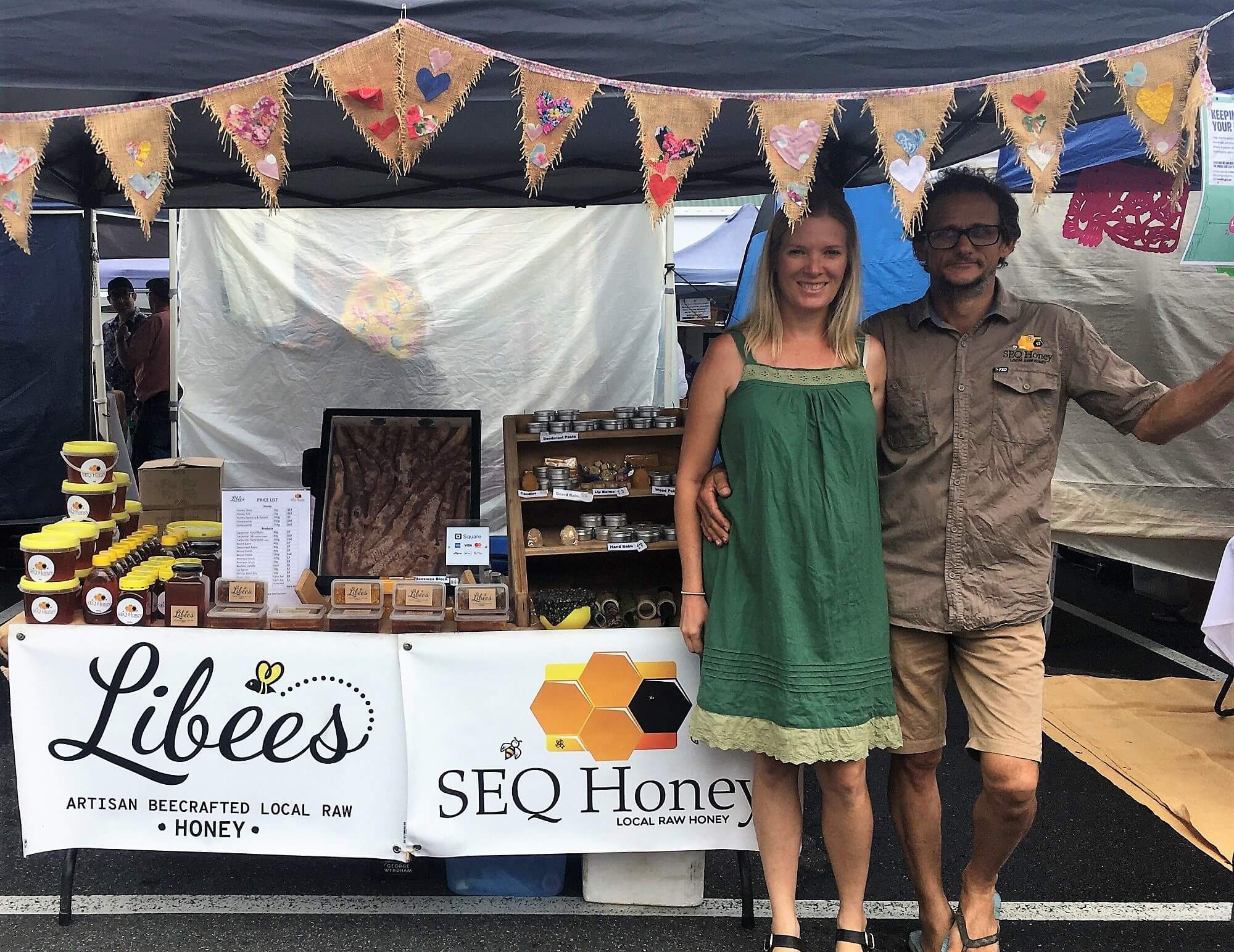
By day, Liby and her partner Craig run their honey operation from a farm north of Gympie, managing more than 200 hives across the area.

Meanwhile, Liby’s mum helps distribute the honey from her Wavell Heights home. At one point, every drum was full from the prolific production of the hives and the local response from a recent leaflet drop across just three Wavell Heights streets created a run on the honey, just in time to create space for another incoming batch.

At around $14 a kilogram for raw honey, locals clearly see value not just in the product itself, but in knowing exactly where it comes from, making Libees Honey one of the suburb’s quiet success stories.

Learning the Hard Way

Photo Credit: Libee’s

Liby’s beekeeping journey started in 2016 with a backyard FlowHive and a determination to learn properly before diving in.

She joined the Northside Beekeepers Association at Lawnton, where she says experienced mentors became invaluable.

“The ancient art of mentoring was the real gold in the raw honey,” she says.

Over time, Liby worked with many retired commercial operators, absorbing knowledge from seasoned producers while building the confidence to eventually launch her own operation.

But the learning curve was steep.

By her own admission, she “killed her first hive” due to American Foul Brood.

Rather than discouraging her, the experience deepened her respect for the complexity of bees and the importance of ongoing education.

Today, she encourages hobby beekeepers to connect with local clubs rather than trying to learn everything online or in isolation.

“It’s amazing to me that many backyard beekeepers don’t join local beekeeping clubs,” Liby says.

“There’s so much knowledge to acquire, especially with new issues like Varroa mite.”

Varroa Mite: Tiny Pest, Big Headache

One of the biggest concerns currently facing Australia’s bee industry is the spread of the Varroa mite — a parasite considered one of the most serious threats to honey bees worldwide.

Liby says unregistered backyard hives can create challenges for the industry because owners may miss critical updates or treatment advice designed to limit the spread.

Bees can travel up to five kilometres, meaning unmanaged infestations can quickly impact nearby registered hives and commercial operations.

For small producers like Liby and Craig, staying informed and connected to the wider beekeeping community is becoming increasingly important.

A Different Kind of Family Business

Photo Credit: Libees Honey

Liby met Craig in 2018, and together they slowly traded suburban life for a more nature-connected existence.

At one point, Craig had 24 hives squeezed into the backyard of his small North Lakes property before council pressure eventually pushed him to relocate. This was a trigger for the move with Liby.

So they packed up and moved north, buying land near Gympie to build a new lifestyle around bees, sustainability and local food production.

Today, their hives are spread not only across their own property, but also across friends’, family members’ backyards and paddocks, and National Park sites. Craig runs a successful queen bee producer arm of the business focusing on creating a very dark calm bee displaying uncapping and recapping behaviour traits that they are hoping will contribute to faster varroa resistant genetics being spread across the region.

“We believe supporting a local beekeeper where you know your honey is coming from — from bees that are probably sitting on your garden flowers — supports the continuation of small local family-run businesses over big corporations and supports the environment on a micro scale,” Liby says.

“And it tastes better.”

Their business also incorporates a strong sustainability focus, including off-grid solar power for honey extraction, reused packaging materials, Australian-made signage and even hive boxes crafted from camphor laurel trees milled on their own property.


A New Monthly Column for Wavell Heights News

Liby will now be sharing her world with readers through a new monthly column for Wavell Heights News.

Expect stories from behind the hives, insights into bee behaviour, seasonal honey updates, environmental challenges, backyard beekeeping tips and a closer look at the fascinating — and often misunderstood — world of bees.

Like the bees she cares for, Liby has built her honey business the old-fashioned way — through patience, hard work and a whole lot of persistence.

Published 5-June-2026