





Residents in Wavell Heights and several surrounding northside suburbs may see Urban Utilities officers inspecting private properties in the coming months as part of a program aimed at reducing wet-weather wastewater overflows.
Wavell Heights is among 31 Brisbane suburbs covered by the Wet Weather Overflow Reduction Program, which runs until 31 December 2026. Other northside suburbs on the list include Nundah, Nudgee, Banyo, Virginia, Aspley, Zillmere, Taigum, Boondall, Deagon, Shorncliffe, Bracken Ridge and Bald Hills.
Urban Utilities says the program targets areas where wastewater overflows have repeatedly occurred during wet weather or where pumping stations and treatment plants have recorded unusually high inflows.
The utility is trying to determine how stormwater is entering a wastewater system that is not designed to carry large volumes of rainwater. Possible sources include cracked pipes, defects around maintenance holes and non-compliant plumbing or drainage connections on private properties.
During heavy rainfall, stormwater entering the wastewater network can significantly increase flows and contribute to overflows, particularly where the system is already under pressure.
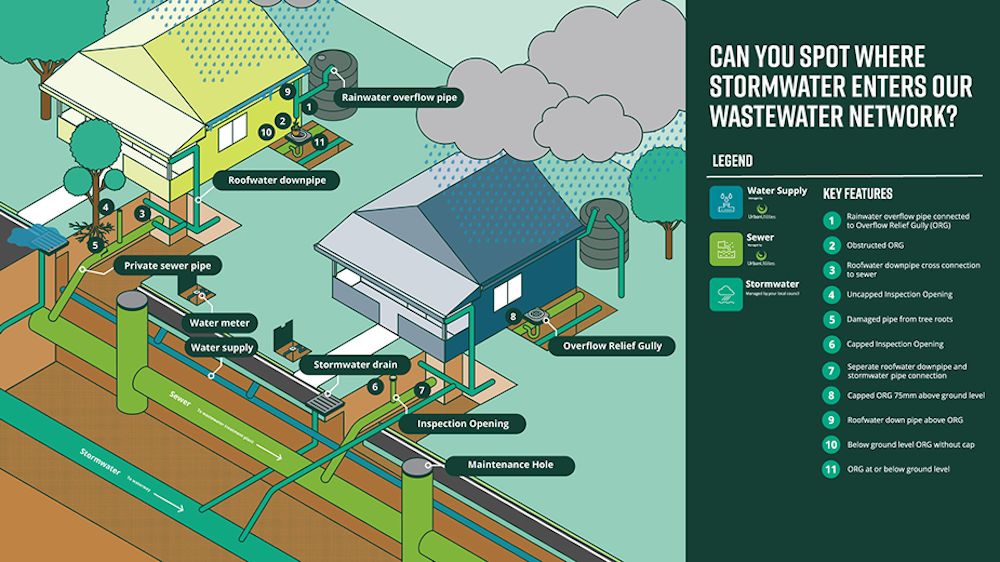
How Smoke Testing Works
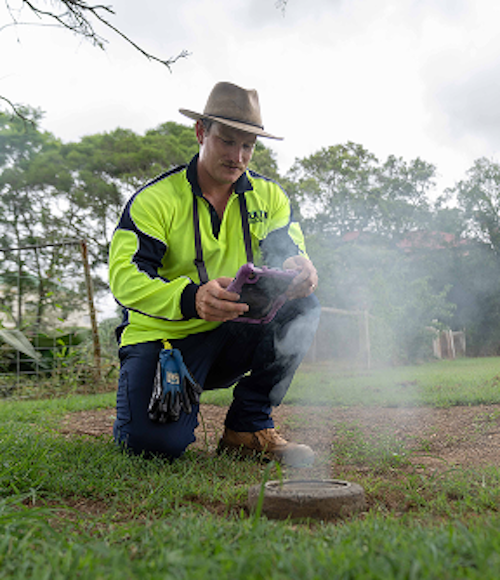
To identify where stormwater may be entering the wastewater network, crews use smoke testing on wastewater pipes and private plumbing. Separately, Urban Utilities uses measures including CCTV inspections and pipe cleaning as part of its broader sewer maintenance work. Non-toxic smoke is pumped into the wastewater lines to trace unwanted flow.
In a correctly connected system, the smoke should travel through the wastewater pipes and escape through normal plumbing vents. If smoke emerges from stormwater drains, downpipes or other unexpected locations, it can indicate a defect or an incorrect connection.
Property Access and Inspector Powers
Under Queensland legislation, authorised officers operating within an approved inspection program have statutory powers to enter private properties at reasonable times without prior occupier consent. However, the inspection-program powers have clear limits: officers cannot use those powers to enter any part of a property where a person resides.
Where an occupier is present, officers must make a reasonable attempt to identify themselves, explain the purpose of the entry and advise that the Act permits entry without consent. For an approved inspection program, they must also provide details of the program.
Public Network vs. Private Responsibilities
Urban Utilities says that excess wet-weather flow stems from a mix of local topography, public infrastructure defects, and private plumbing issues. While the program allows testing on private land, an inspection does not automatically mean a property is defective or that the homeowner will incur immediate repair costs.
The testing is intended to identify where stormwater is entering the network and help inform targeted action. Depending on what is found, further work may involve private plumbing, Urban Utilities infrastructure or both.
For northside residents, knowing why access may be sought, what officers are permitted to inspect and what happens when a defect is identified will be important as testing continues.
Published 5-Aug-2026


