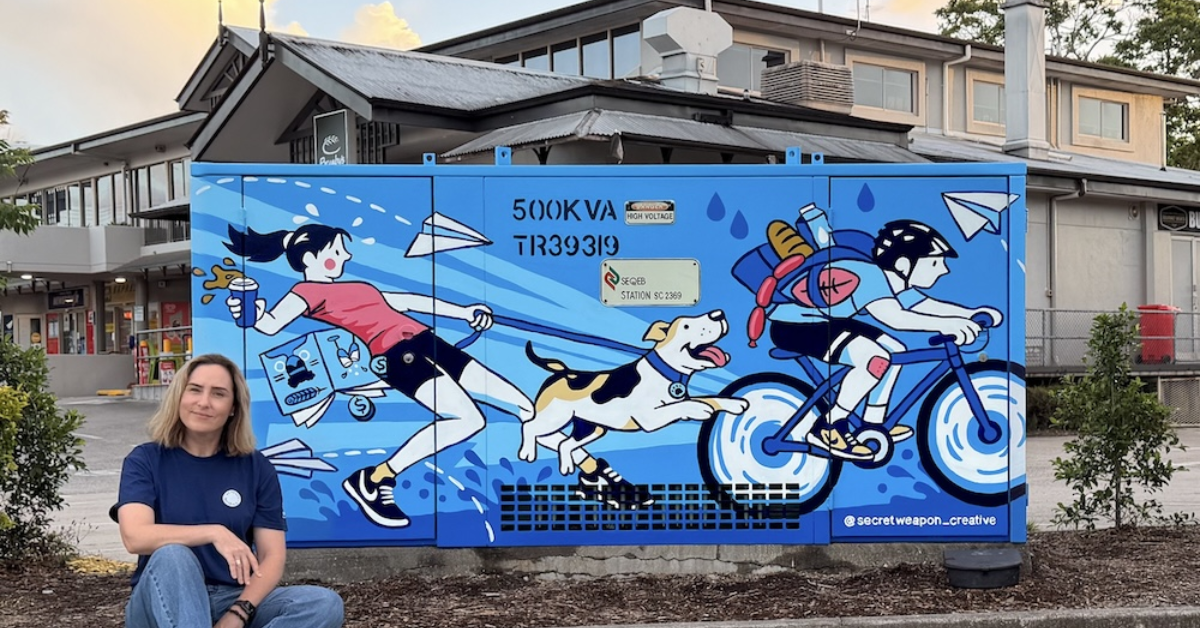
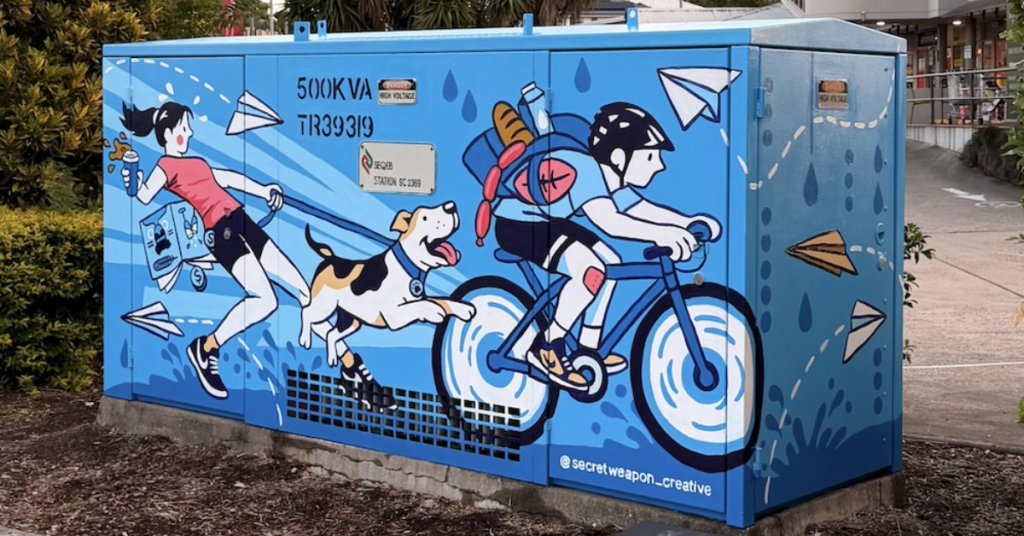
A quiet utility box at the intersection of Shaw Road and Vale Street has been transformed into a vibrant portrait of daily life that turns the mundane errands of Wavell Heights residents into a permanent public art display.
This project was completed earlier this week as part of a local council initiative to improve streetscapes.
The artwork focuses on the familiar sights that define this specific pocket of Brisbane. Rather than showcasing distant landmarks, the design highlights the local footy culture and the small-town feel of the shopping precinct.
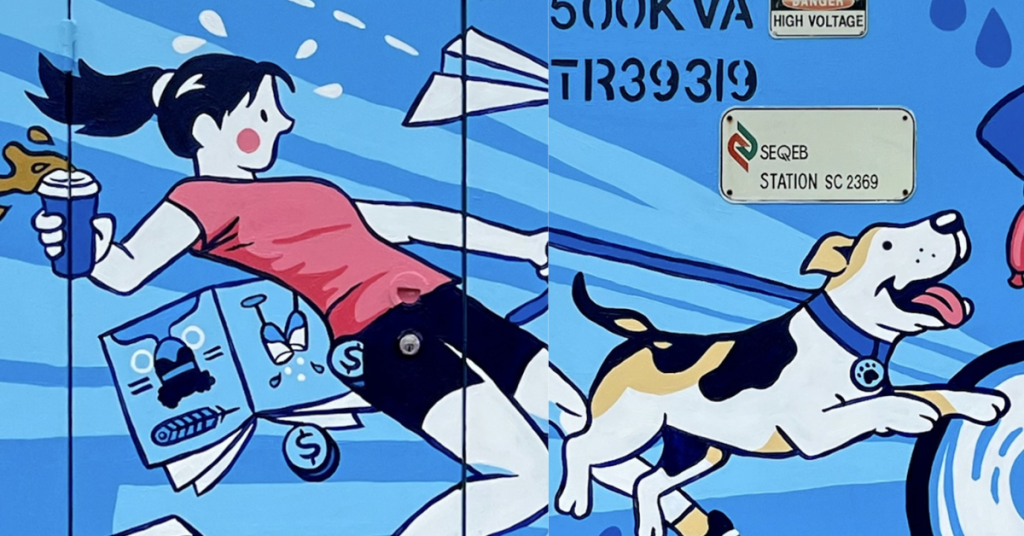
The scene depicts a teenager navigating the area with the tell-tale signs of a weekend sports injury, carrying a bag filled with fresh bread and butcher’s meat. This imagery connects directly to the nearby sports fields and the shops that locals visit every day.
The piece also brings a sense of energy to the street corner by capturing a moment of chaos familiar to any pet owner. It features a resident out for a walk with a dog that is far more interested in the smell of dinner than the takeaway coffee being held by its owner. By highlighting these messy, relatable human moments, the installation reflects the actual character of the neighborhood rather than a polished, staged version of suburban life.
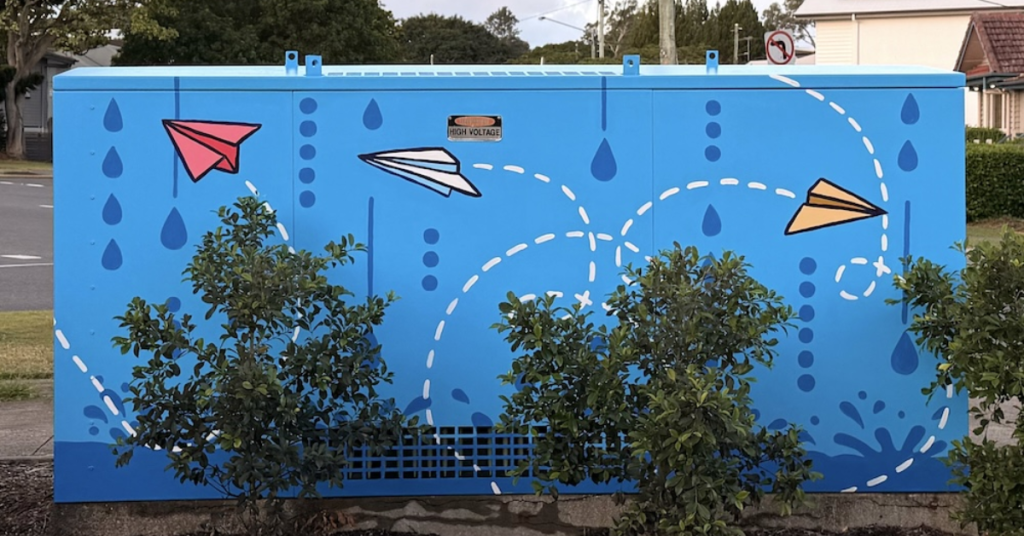
The artist took a practical approach to ensure the piece stands the test of time against both the elements and local growth. Because the utility box is tucked against hedges that grow quickly throughout the year, the layout was carefully planned to manage shifting visibility. The front of the box serves as the main focus for pedestrians and drivers, while the sides and back utilize a lighter pattern featuring clouds and paper planes.
These paper planes serve two purposes. Beyond providing a nod to the travel agency located nearby, they act as a visual trick to help keep the surface clean. By breaking up large, empty spaces on the metal box with intricate patterns, the design discourages graffiti. This thoughtful planning means the installation will continue to look sharp even as the surrounding greenery changes with the seasons.
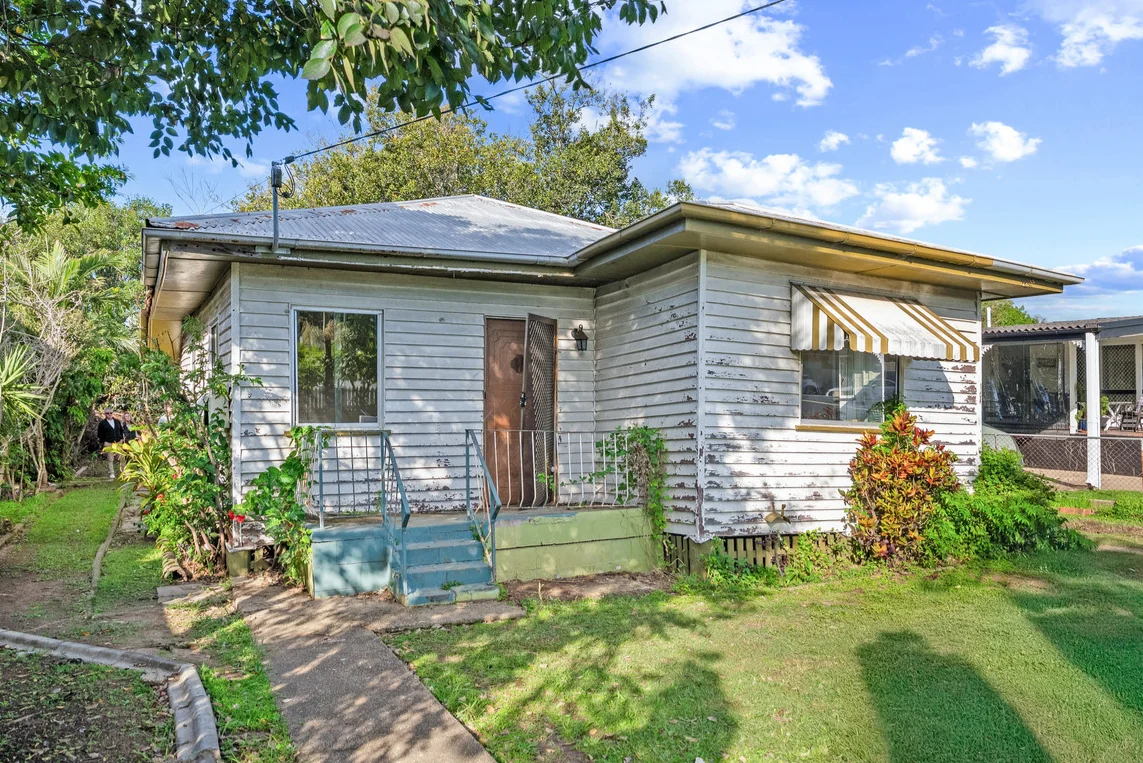
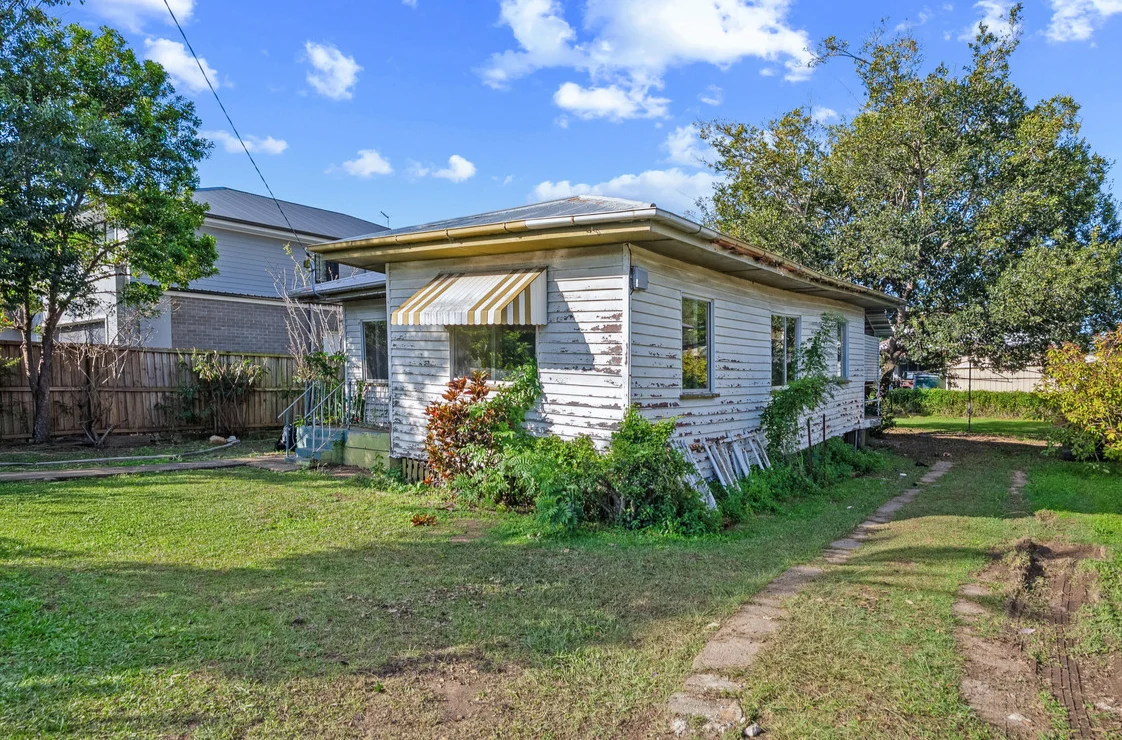
The home is being sold through Place Ascot, with Thomas Coussens listed as the selling agent. The on-site auction is scheduled for Thursday, 16 July 2026, at 5pm.
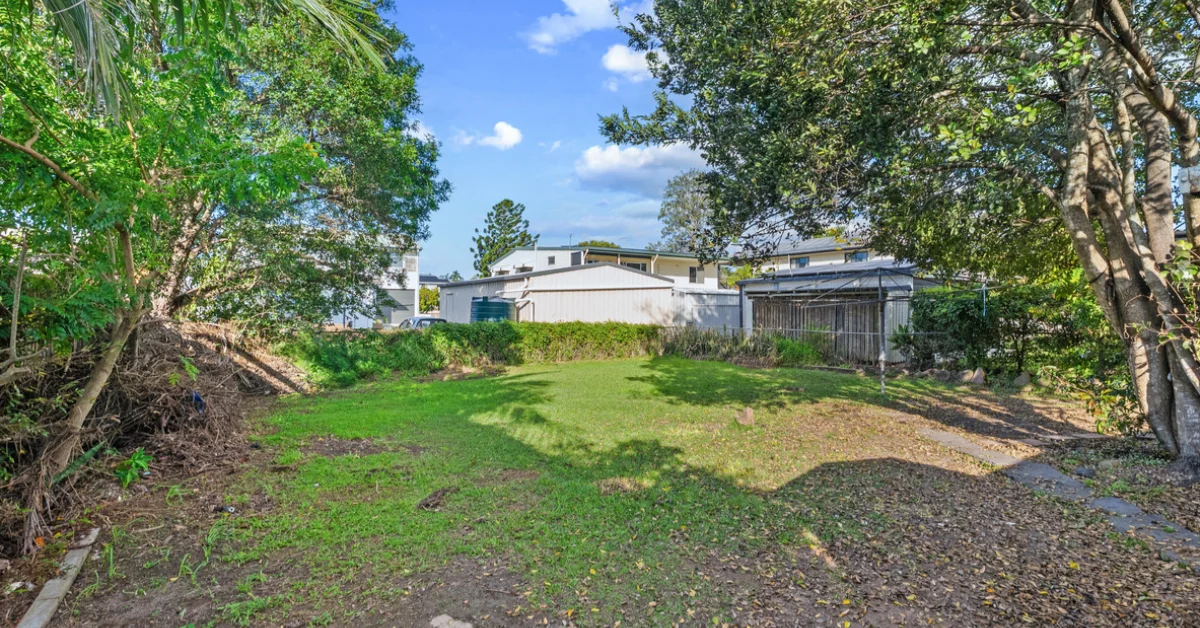
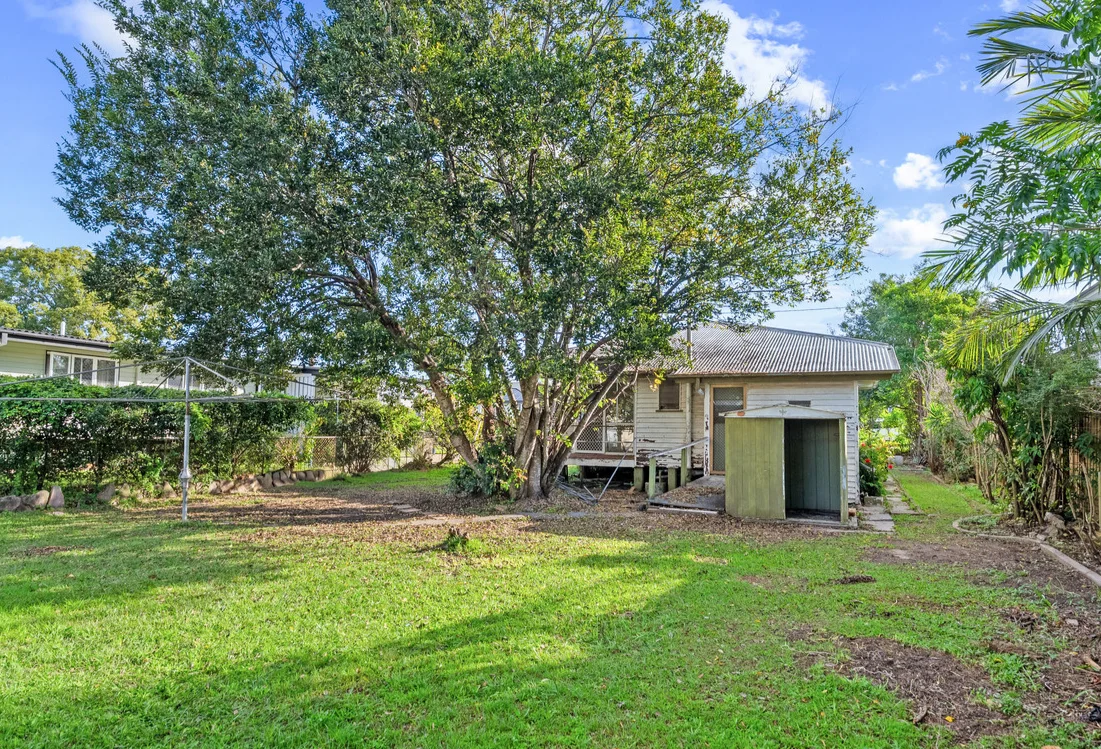
The property has three bedrooms, one bathroom and one car space on a 655sqm allotment. The listing presents the site as a knock-down and rebuild opportunity, subject to approval.
Photo Credit: Place
Reported Squatter Occupation At Newman Road
The interstate owner had initially been told squatters might have been living at the property.
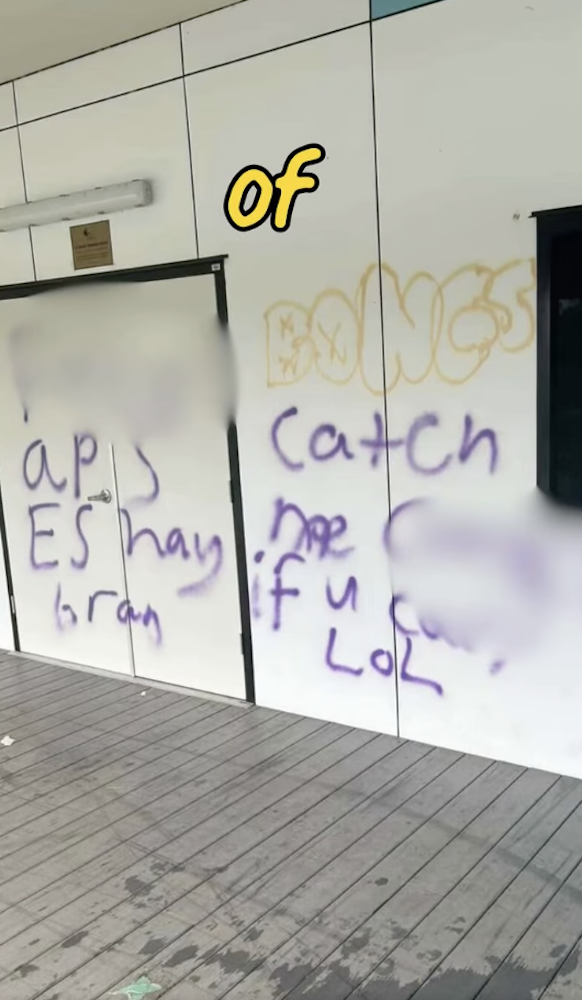
The home had not been legally lived in for 15 years, while squatters had reportedly been staying there for at least three years. The property was left with rubbish, graffiti and extensive damage.
The backyard included a camper, tents and rubbish, with people reported to have been living in different parts of the site.
Police attended the Newman Road property before later returning to remove the occupants. Locksmiths secured the home, but the front and rear doors were kicked in again within days.
When specialist cleaners later attended the property to quote the clean-up, another occupant was still inside. Those at the property were given an opportunity to collect belongings before the clean-up began.
Photo Credit: Place
Two-Day Clean-Up Before Auction
Specialist trauma cleaners spent two days clearing the Wavell Heights property.
The clean-up filled an industrial skip with rubbish, while hazardous waste was also safely disposed of.
The property has since attracted buyer inquiry, with the sale campaign focused on the land size, location and rebuild potential rather than the existing dwelling.
Photo Credit: Place
655sqm Wavell Heights Block Offered
The Place listing describes 15 Newman Road as a 655sqm parcel in a tightly held part of Wavell Heights, surrounded by established homes.
The property is about 600m from 7th Brigade Park, bike tracks and a dog park, and about 1.2km from Westfield Chermside. It is also listed as being close to Chermside Aquatic Centre, Chermside Library, local schools, public transport and Virginia Train Station.
The Gerns Factory Residence in Geebung highlights Brisbane’s industrial heritage, blending German craftsmanship with Queensland’s cultural history. Built in 1914 by German immigrant Heinrich (Harry) Christian Gerns, it reflects the contributions of German settlers to Geebung’s industrial foundation and Brisbane’s development
The timber Queenslander-style home at 39 Buhot Street East was constructed by Gerns after he relocated to Geebung in 1895. The move aligned with the area’s German farming community and countered anti-German sentiment during World War I. The house, designed for Queensland’s subtropical climate, became the centre of Gerns’ family and business activities.
Adjacent to the residence, Gerns established a smallgoods factory that produced premium hams, sausages, and continental smallgoods. The business gained a stellar reputation across Brisbane, providing jobs and fostering Geebung’s economic growth.
Today, the Gerns Factory Residence is listed on Brisbane’s heritage register, protecting its architectural and cultural value. While privately owned, the residence is a notable historical site, reflecting the entrepreneurial spirit and resilience of Brisbane’s early settlers.
The legacy continues through Gerns Continental Smallgoods, a family-owned business still operating from its Geebung location. Known for traditional recipes and gluten-free options, the factory outlet on Buhot Street serves both wholesale and retail customers, maintaining the high standards set by Heinrich Gerns.
The Gerns Factory Residence is part of Geebung’s broader narrative of German heritage, which has shaped the area’s social and economic landscape. Nearby suburbs like Wavell Heights share similar stories of German settlers contributing to Queensland’s development.
Visitors can explore the legacy of the Gerns family and other historical sites in Geebung, gaining insight into the industrious spirit that helped build Brisbane’s early economy.
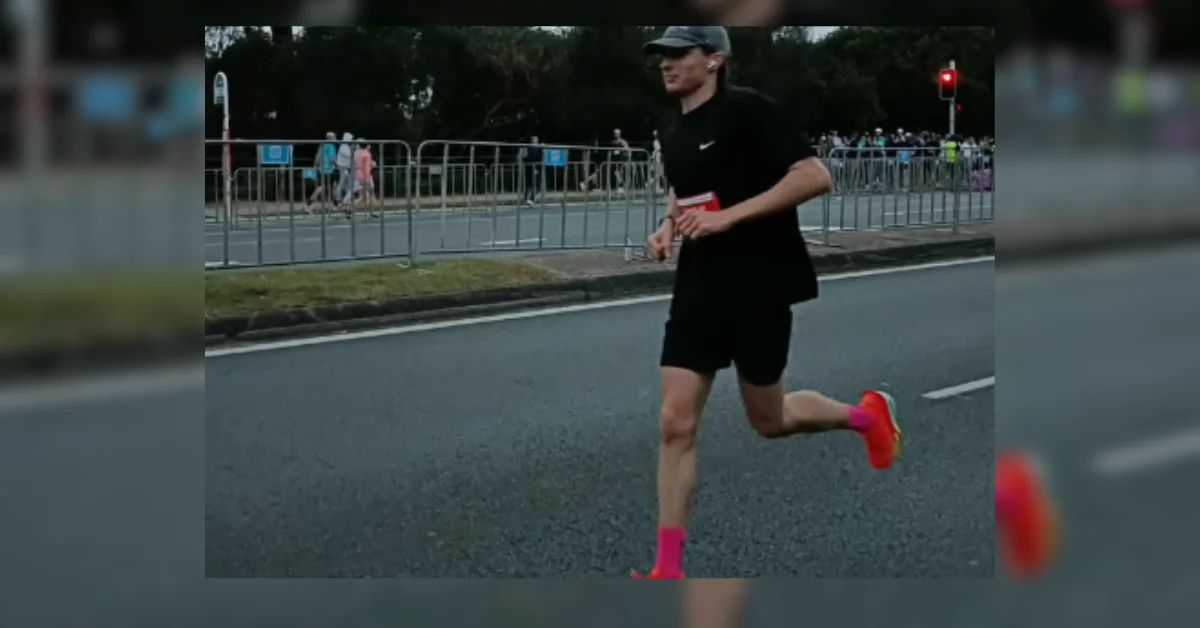
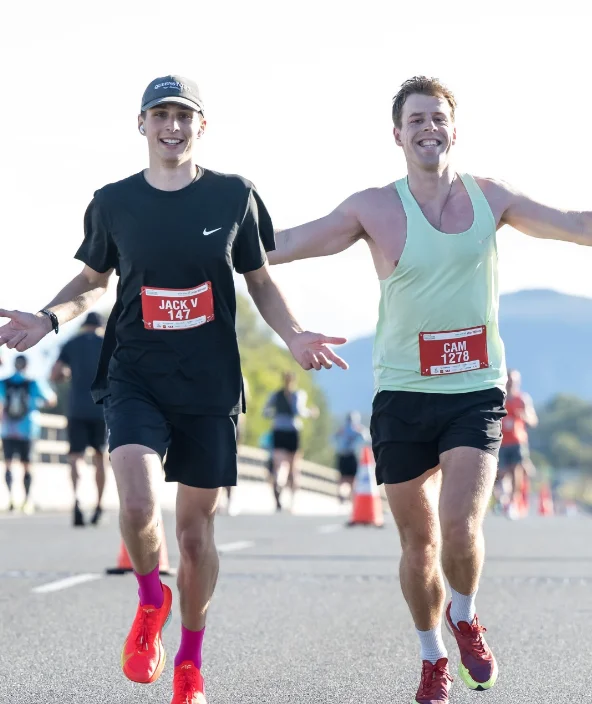
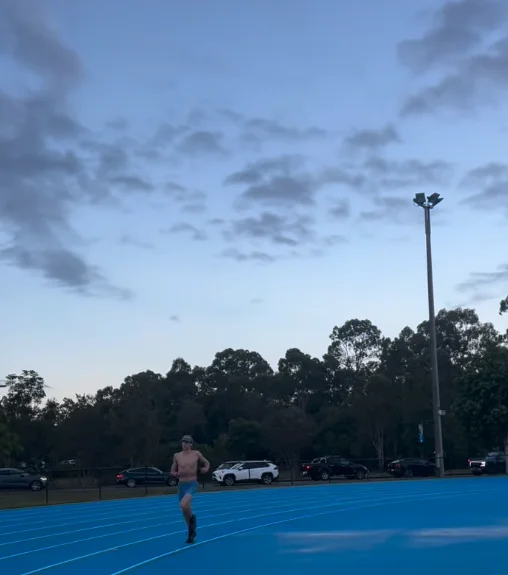
For Wavell Heights runner Jack Vander Velde, the road to this year’s major endurance events starts before the day properly begins, with early alarms, long kilometres and a training schedule built around work and university.
Wavell Heights resident Jack Vander Velde is preparing for one of his busiest endurance seasons yet, with three marathons and his first Ironman 70.3 event ahead.
His calendar includes the Gold Coast Marathon, Sunshine Coast Marathon, Sydney Marathon and Ironman 70.3 Port Macquarie. Behind those events is a daily routine shaped by early starts, careful planning and a growing commitment to long-distance racing.
Jack had shown a natural ability for distance running before marathon training became a serious focus. The shift came about four years ago, after his father began running marathon distances. That gave Jack a reason to test himself over the same challenge.
He went on to enter the Queenstown Marathon in New Zealand, followed by the Brisbane Marathon and Sunshine Coast Marathon. At Sunshine Coast, he broke the three-hour mark and recorded a personal best.
His recorded results include a 3:04:18 finish at the 2024 Queenstown Marathon and a 2:50:25 finish at the 2025 Sunshine Coast Marathon, where he placed third in his category. He also completed the 2025 Bridge to Brisbane 10km in 34:18.
Jack’s week includes 60 to 70 kilometres of running across five days. His program combines interval sessions, speed work, easier runs and a long run, supported by swimming, cycling and strength training.
He also takes part in Kedron Parkrun each weekend and has a local training link through Old Skool Run Club in Wavell Heights, which meets on Thursday mornings at Retro Espresso.
The training load sits alongside work and university commitments. Jack structures his days around early starts so training can be completed before the rest of the day begins.
Family and friends have also been part of his support network, along with his girlfriend, best mate and the Wavell Heights running group.
Jack’s goals for the year include finishing each of his three marathons in under two hours and 30 minutes.
The Gold Coast Marathon is scheduled for 5 July 2026, followed by the Sunshine Coast Marathon on 2 August 2026 and the Sydney Marathon on 30 August 2026.
Later in the year, he is aiming to complete Ironman 70.3 Port Macquarie in less than five hours. The 18 October 2026 event includes a 1.9-kilometre swim, 90-kilometre bike leg and 21.1-kilometre run.
The Port Macquarie race will be Jack’s first triathlon. After this year’s events, he plans to attempt a full Ironman next year and eventually compete in endurance events around the world.
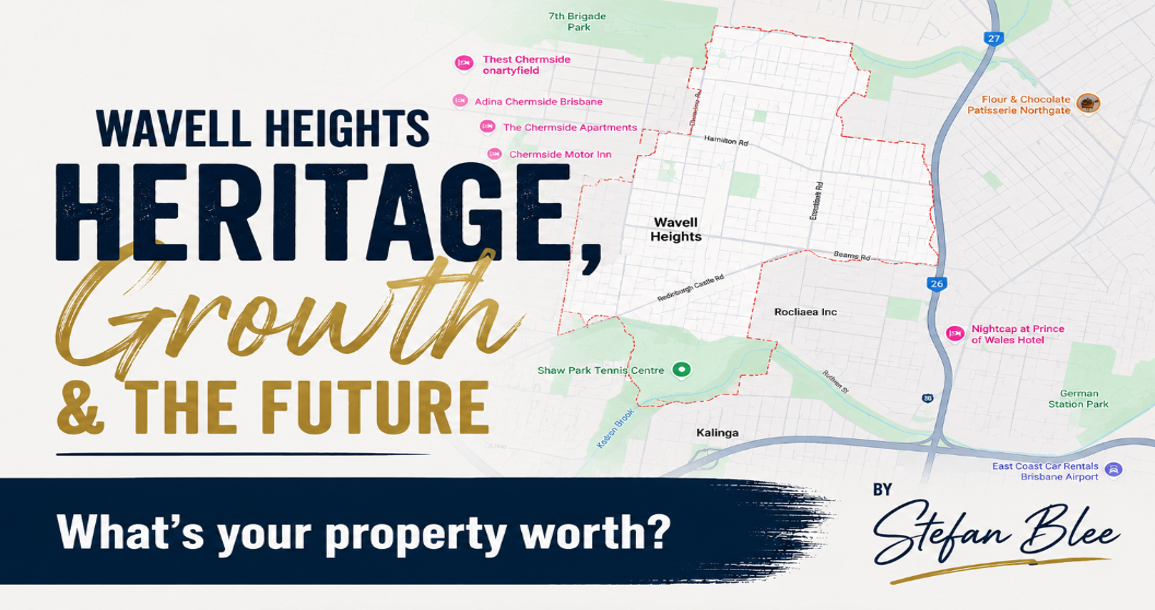
Statistics provide the snapshot, but local experience adds the context. Stefan Blee shares some statistics and observations about the Wavell Heights property market, reflects on one of the suburb’s historic homes, and offers his thoughts on a major infrastructure project that could shape the suburb’s future.
It has certainly been an interesting few weeks in the Brisbane property market. While much of the media continues to focus on uncertainty, our experience on the ground has actually been very positive.
Last weekend was one of our busiest in quite some time, with excellent attendance at open homes and strong buyer engagement across a number of properties. It reinforces what we’ve been saying for a while now – well-presented homes that are priced correctly are continuing to attract genuine competition.
There’s no question that buyers are more discerning than they were a couple of years ago. If a property is overpriced, they’ll simply move on. However, when the pricing, presentation and marketing are aligned, buyers are still prepared to act with confidence.
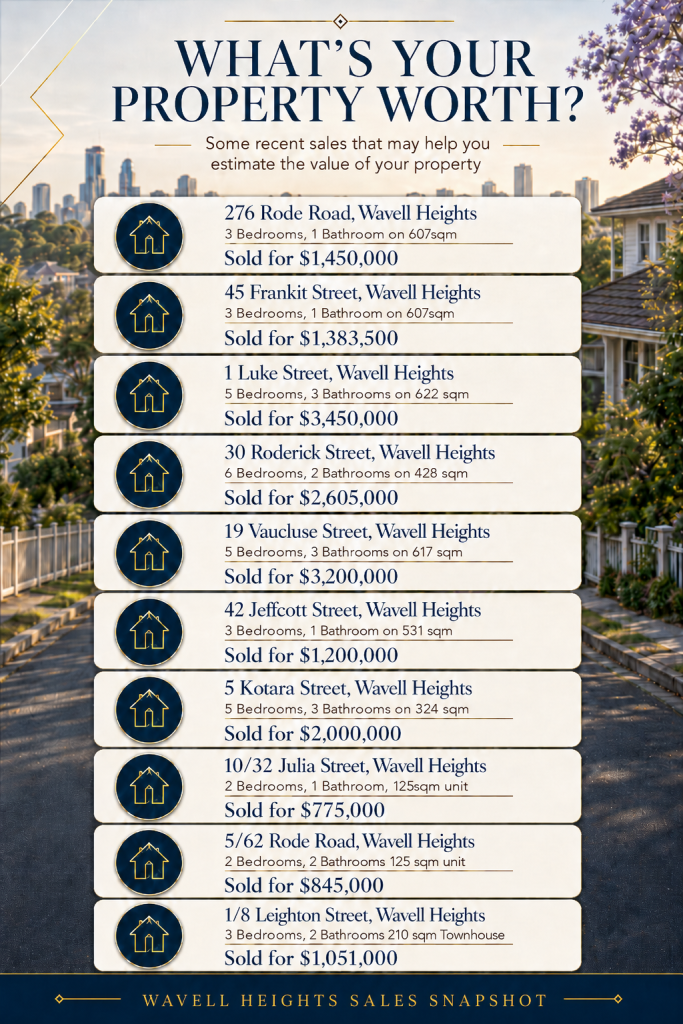
We’ve seen that firsthand with the successful campaign at 276 Rode Road, while Ellcon Constructions’ stunning new home at 26 Frankit Street has attracted excellent interest since launching. Fifteen Sumar Street has also been incredibly well received, particularly by buyers looking for a home with plenty of space and the opportunity to add value over time. We received three offers after the first open home and are currently negotiating with those buyers, while 12 Vaucluse Street is also under contract.
One statistic that continues to receive plenty of attention is Brisbane’s auction clearance rate. Personally, I don’t place a great deal of emphasis on it, particularly in our area where many homes still sell by private treaty. What I pay attention to is buyer enquiry, inspection numbers, conversations at open homes and the number of quality offers being presented. Right now, all of those indicators remain encouraging and, if anything, buyer confidence feels like it’s gradually improving.
Economic conditions are still creating challenges for many families, and buyers are naturally taking a little more time before making decisions. That said, property values throughout Wavell Heights have remained resilient, and we’re certainly not seeing the dramatic slowdown that some headlines would have you believe.
Away from real estate, I came across an interesting local story this week. Like many Australians, I’ve enjoyed watching Jacob Elordi’s success on the international stage, and I was surprised to learn about his family’s connection to Wavell Heights. It’s always fascinating to discover the local stories behind people who go on to achieve great things.
I was also reminded of one of our suburb’s hidden gems — the heritage-listed Gohdes Farmhouse on Spence Road. Built in the early 1900s, it stands as one of the last remaining reminders of Wavell Heights’ farming history. Long before the suburb became one of Brisbane’s most sought-after residential locations, the area was home to dairy farms, pineapple plantations and banana crops. It’s a wonderful piece of local history that’s worth appreciating.
Finally, it was disappointing to hear that the proposed Gympie Road tunnel has been delayed until after the 2032 Olympic Games. While these projects inevitably take time, I genuinely believe this will be an important piece of infrastructure for Brisbane’s north.
If it succeeds in removing even a proportion of heavy vehicles and through traffic from Gympie Road, it has the potential to make a noticeable difference for local residents and commuters alike. As Brisbane continues to grow, investment in projects like this will become increasingly important if we’re going to keep pace with our city’s future.
As always, if you’d like to chat about the local market or simply find out what your property might be worth in today’s conditions, I’d love to hear from you.
Seasonal pattern: Aug 2025 peak ($1.649M) reflects typical Brisbane winter-to-spring premium. Sep dip to $1.314M is consistent with spring-entry lag before a Feb 2026 recovery ($1.6M, 36 sales — highest-volume month). May 2026 recovered to $1.536M once four previously unpriced sales were confirmed. Apr–Jun softening reflects broader market caution.
Median price by bedroom count
12-month · 213 sales with bedroom data
Dominant type3-bed · 88 sales
5-bed premium vs 4-bed+62%
5-bed premium vs 3-bed+79%
Entry point (2-bed)$818.5K
Two distinct buyer pools: The step from 4-bed ($1.542M) to 5-bed ($2.5M) is a 62% premium jump — not incremental, an entirely different segment. 3-bed at $1.398M remains the volume sweet spot (41% of all sales).
Median price by land size
12-month · 219 sales with land area data
Most common size600–700 m2 · 99 sales
Median block (suburb)607 m2
400–500m2 vs 500–600m2+28% premium
400–500 m2 anomaly: Subdivided lots in this range ($1.81M median) outperform the larger 500–600 m2 tier ($1.41M) by 28% — reflecting newer builds and knock-down-rebuild demand attracting a premium over older stock on bigger blocks.
Days on market distribution
12-month · 176 sales with DOM data
Median DOM28 days
Mean DOM49 days
Sold within 30 days53% of sales
Longest sale370 days
Bimodal market: 93 sales (53%) sold within 30 days — correctly priced properties move fast. The long tail beyond 90 days (22 sales, 13%) reflects overpriced listings that eventually find their level, pulling the mean well above the median.
3-month snapshot vs prior period
Apr – Jun 2026 vs Jan – Mar 2026
Recent 3m median$1.400M
Prior 3m median$1.600M
Median shift–12.5%
Volume shift–32.8%
Recent 3m DOM25 days
Meaningful softening: The –12.5% median drop and –32.8% volume fall are significant. The prior period (Jan–Mar) was anchored by a very strong Feb 2026 (36 sales, $1.6M median). The recent period has a higher proportion of sub-$1.4M sales alongside a cluster of prestige transactions — the wide mean-median gap ($1.619M vs $1.400M) reflects a split market. The 6 remaining unpriced records could partially close this gap once registered.
Top 10 sale prices
Apr – Jun 2026
Prestige segment active: Four sales above $3M this quarter — 1 Luke St ($3.45M), 27 Abbey St ($3.3M), and 19 Vaucluse St and 8 Kiama St (both $3.2M). All five-bedroom homes on 617–647 m2 blocks, all selling within 48 days.
Published 1-July-2026
Stefan Blee is a Proud Promotional Partner of Brisbane Suburbs Online News
Note: This article is based on data from publicly available sources at the time of publication and is intended for general information only. Readers should conduct their own research and seek independent advice before making any property decisions.
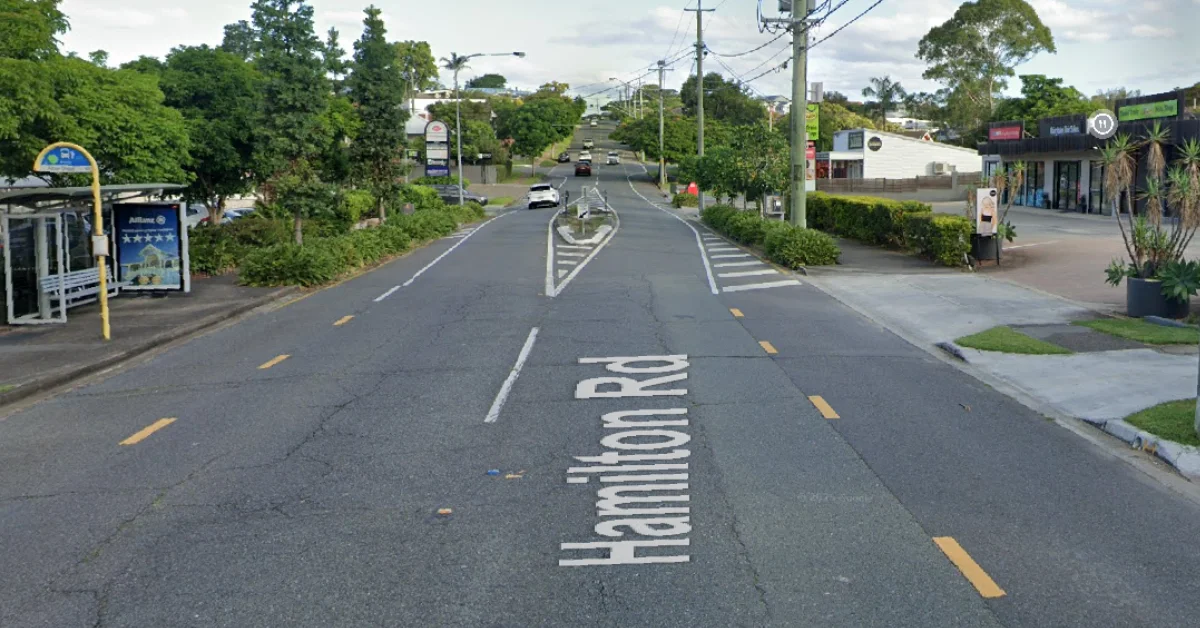
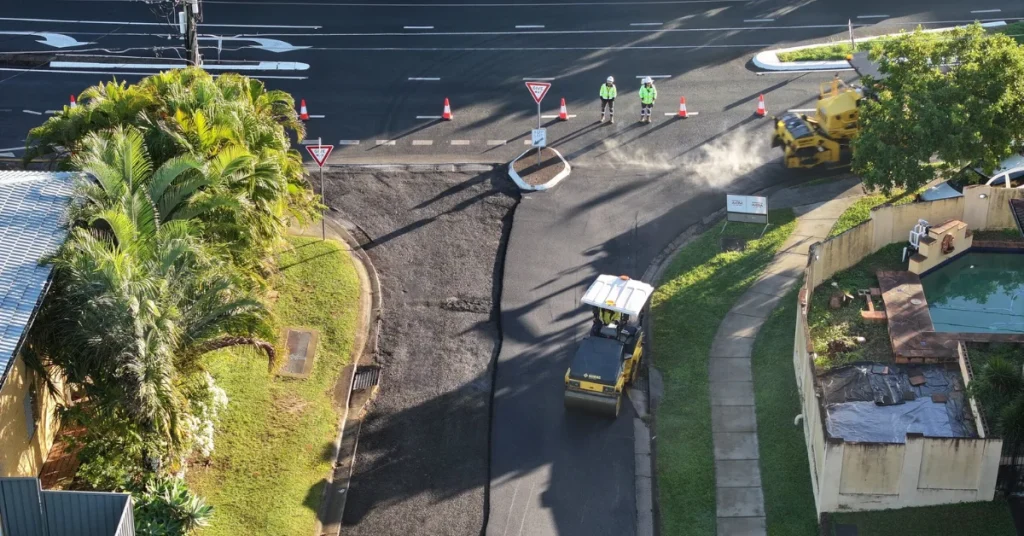
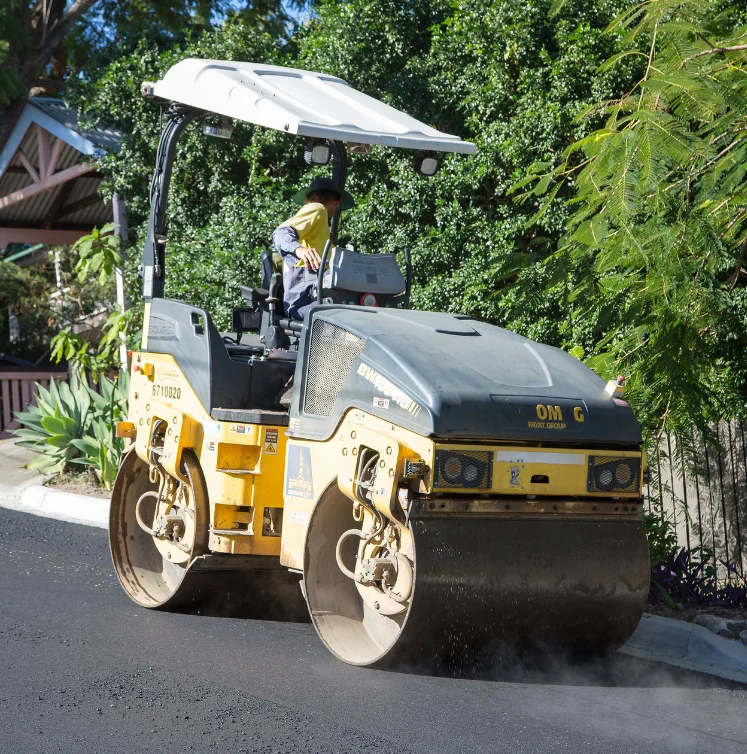
Hamilton Road has been included in Brisbane’s $110 million Operation Smooth resurfacing program, placing Wavell Heights among the suburbs named in the citywide roadworks push.
The program will resurface nearly one million square metres of roads across Brisbane. Hamilton Road is listed for Chermside and Wavell Heights, making it the local road connected to the resurfacing rollout.
No local closure timetable or detour plan has been released for Hamilton Road.
Operation Smooth has been set up to deliver smoother road surfaces across Brisbane, with the program focused on some of the city’s busiest roads.
The resurfacing program follows the Big Fill pothole blitz, which at its peak repaired one pothole every two minutes across Brisbane.
Hamilton Road is listed alongside several other major roads, including Forest Lake Boulevard, Albion Road, Ipswich Road, Logan Road, Lutwyche Road, Moggill Road, South Pine Road, Kedron Park Road and Toohey Road.
The southern approach to the Story Bridge is also included and has been identified as the highest-profile resurfacing work in the program.
The resurfacing program sits within the 2026-27 Budget, which also increases rates for Brisbane homeowners.
Rates will rise by 3.97 per cent, with some suburbs facing increases of up to 7.5 per cent. The minimum rates cost for Brisbane residents will be $948.64.
A Wavell Heights-specific rates figure has not been provided in the available budget details.
The budget includes several citywide measures for households.
Residents who pay rates on time will receive a $60 annual discount. The maximum pensioner rates rebate will increase to $1,350, while first home buyers will receive a rates establishment fee exemption.
Credit and debit card surcharges will be removed from 1 July 2026.
Renters and owner-occupiers will receive 10 free 100kg waste vouchers. Brisbane residents will also continue to receive two free native plants, and the annual kerbside collection service will continue.
More than $2 million is listed for free off-peak transport for seniors.
Wider Roads And Transport Program
Operation Smooth forms part of a $1.9 billion transport and infrastructure investment.
More than $400 million is listed for road upgrades, including the Beams Road corridor upgrade, intersection upgrades in Inala and Coorparoo, and a new crossing on Gympie Road at Bald Hills.
The budget also includes $213 million to subsidise bus, CityCat and Brisbane Metro services.
More than $63 million is allocated for footpaths and bikeways, while artificial intelligence technology is planned for trial within Brisbane’s traffic signal network.
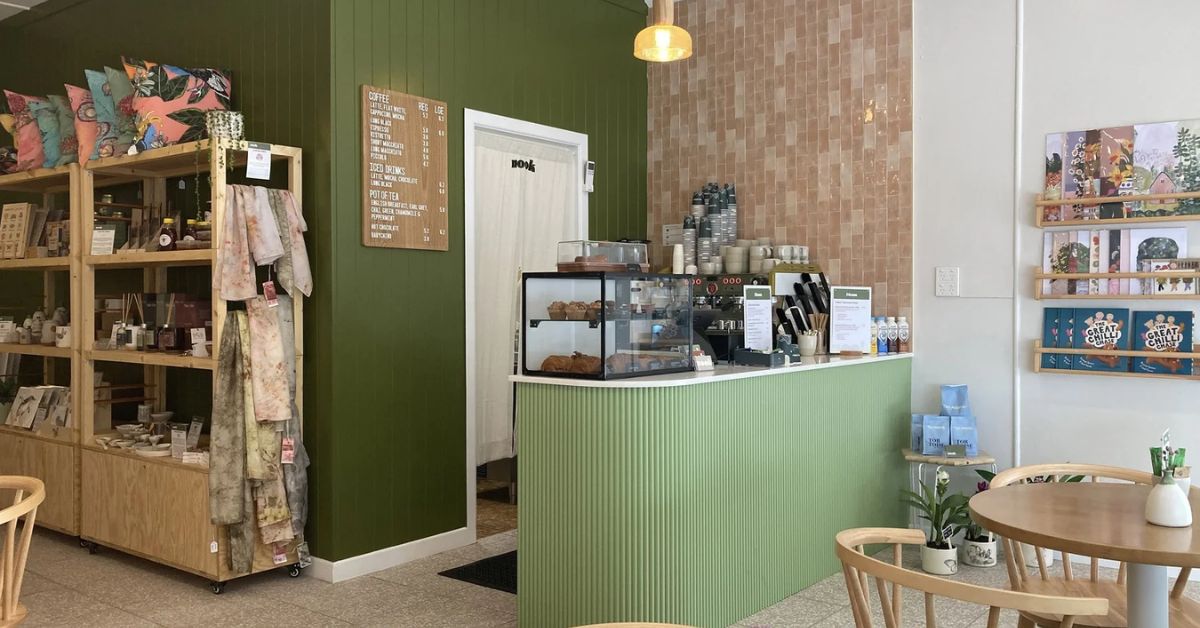
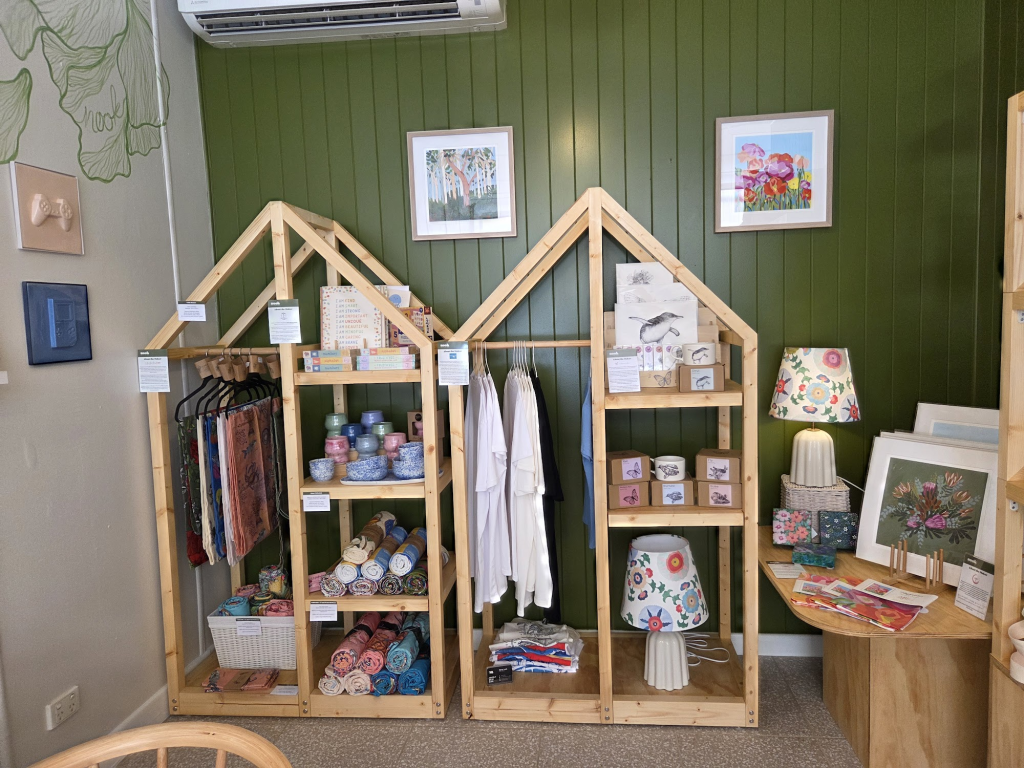
Nook Coffee has quickly found its place in the morning routines of Northgate locals, offering specialty coffee, house-made jaffles and a space lined with handmade goods from local artisans, all pulled together by owner Suzanne and her daughter Bijoux.
The café sources its coffee from Tim Adams Specialty Coffee, a Sunshine Coast roaster known for quality single origins and blends, and its pastries from Danny’s Bread, keeping the food offering as local as the rest of the fit-out.
House-made jaffles are made fresh each day, bringing a nostalgic and satisfying edge to the menu that slots naturally alongside the morning coffee crowd.
A café that fills a particular gap
Northgate has long had limited options for a true neighbourhood café, often sitting in the shadow of nearby Nundah’s busier dining and coffee scene. Nook gives locals exactly the kind of venue many residents appreciate: somewhere that remembers your order, supports local makers and gives people a reason to walk rather than drive.
What sets Nook apart from a typical neighbourhood café is its support for local artisans. The shelves showcase ceramics, candles, books and fresh flowers alongside a rotating collection of handmade goods.
Jewellery, soft furnishings, artworks and children’s toys all feature in the display, turning the café into a small marketplace as much as a place to enjoy a flat white.
Community connection and local craft
The combination of specialty coffee and artisan goods is not new to Brisbane, but Nook delivers it with a genuine sense of warmth rather than as a carefully curated concept.
Much of that comes from Suzanne’s vision for the café and the involvement of her daughter Bijoux, whose presence helps create a welcoming family atmosphere.
Suzanne sees the café as a place for community connection as much as a coffee destination. The shelves provide local artisans with a permanent space to showcase their work, giving makers an audience beyond the occasional weekend market and helping strengthen connections within the local community.
A stop worth making if you’re in the area
Nook Coffee is at 135 Northgate Road, Northgate. Follow along at nookcoffee.com.au or on their Instagram page for updates on new artisan stock and café news.
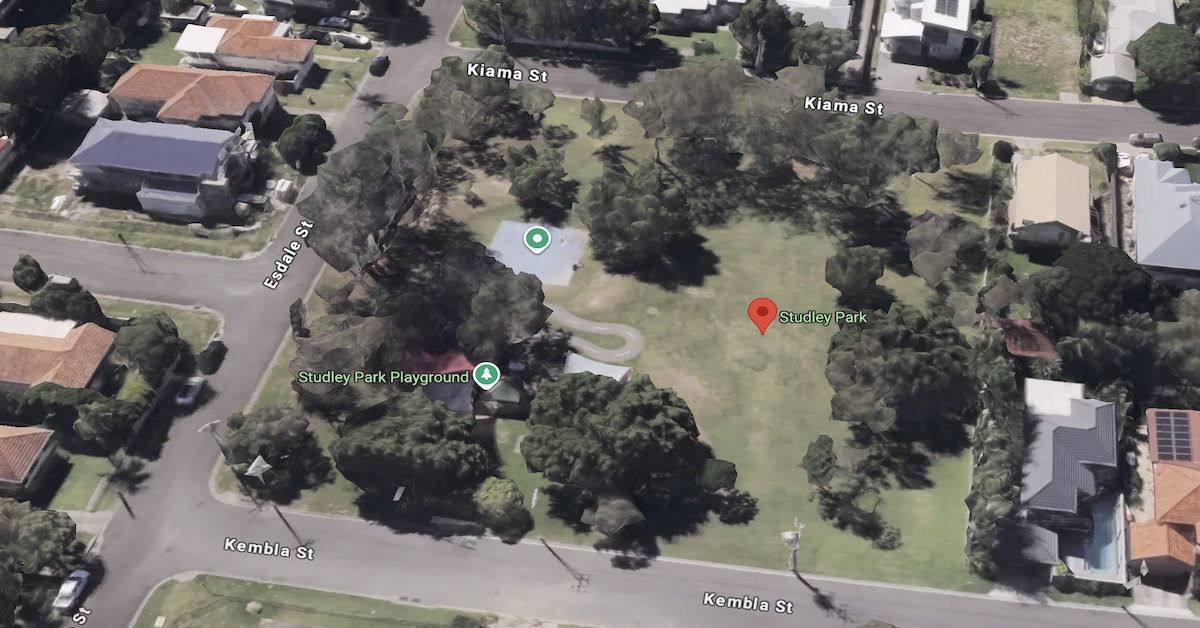
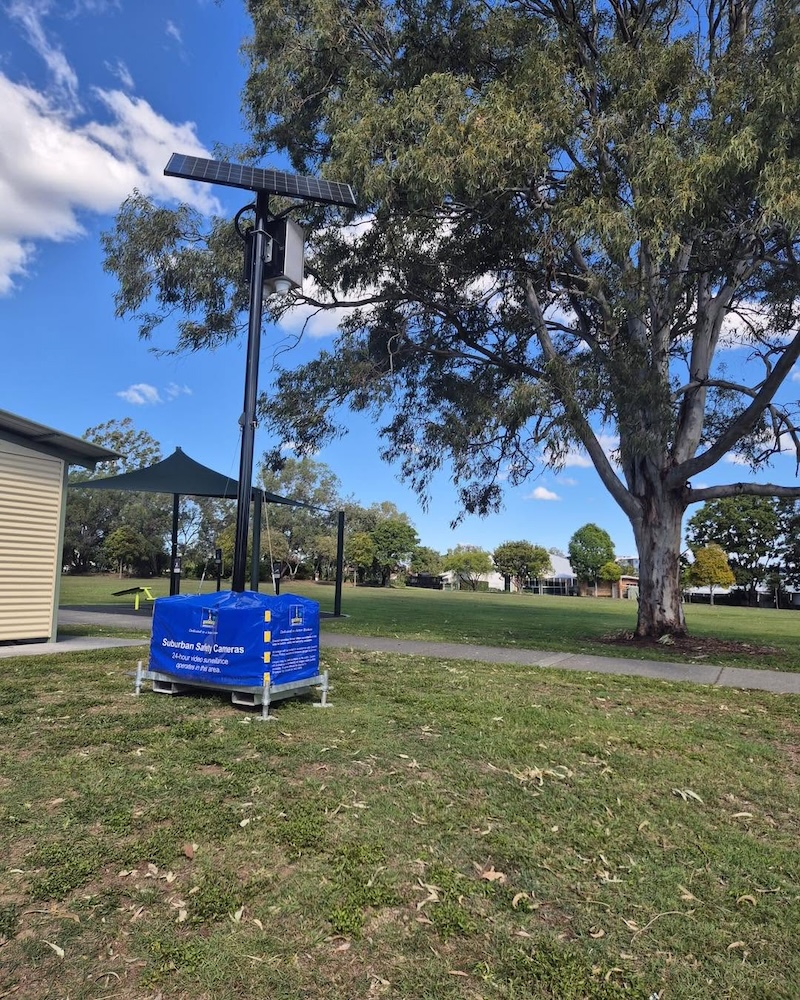
Locals who frequent Studley Park in Wavell Heights will now be under the watch of a temporary CCTV safety camera after reports of illegal drug use, discarded syringes and antisocial behaviour prompted action from local representatives.
The safety measure follows concerns raised by residents living near the park, particularly around the Pfingst Road area, where community members reported incidents that they said were affecting the safety and enjoyment of the local green space.
Reports From Residents Prompt Action
Northgate Ward Cr Adam Allan said his office had received reports of ongoing antisocial behaviour and illegal drug use at Studley Park.
Local MP Mick de Brenni has also recently raised concerns about community safety and vandalism in the wider area, calling for additional safety cameras and police resources.
In response, Brisbane City Council arranged for a temporary CCTV safety camera has been installed at the park and would be actively monitored to support community safety and assist investigations by the Queensland Police Service when required.
The installation forms part of a broader response aimed at addressing concerns raised by residents who have continued reporting incidents in and around the park.
Sharps Disposal Bins Added Near Studley Park
Alongside the camera installation, Council is also introducing sharps disposal bins in the area.
The move comes after reports of discarded syringes being found in and around Studley Park. Residents who come across syringes are being encouraged to contact Council so they can be collected and disposed of safely.
Mr Allan said community members had played an important role by reporting issues and helping authorities understand the extent of the problem. He encouraged residents to continue reporting incidents of illegal drug use and antisocial behaviour through Policelink, noting that criminal matters remain the responsibility of the Queensland Police Service.
For many residents who regularly use Studley Park, the new measures are intended to help improve safety and confidence in one of Wavell Heights’ local recreational spaces.
Did you know Queensland’s honey bee industry contributes an estimated $2.4 to $2.9 billion to the state economy every year?
More than 100,000 managed hives help pollinate Queensland crops annually, supporting everything from macadamias and avocados to berries, melons and seed crops. Without bees, many of the foods Queenslanders take for granted would simply not exist at the same scale.
Yet for most people, bees are still mainly associated with one thing: honey.
And in Wavell Heights, one local honey producer has quietly built a loyal following.
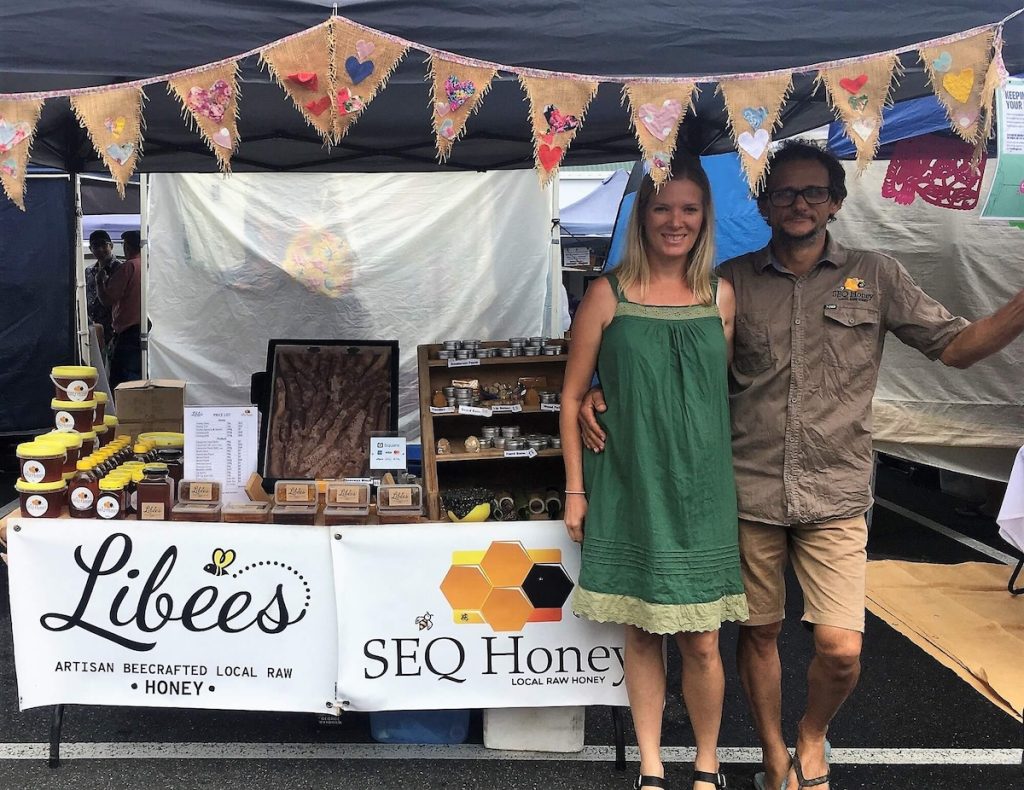
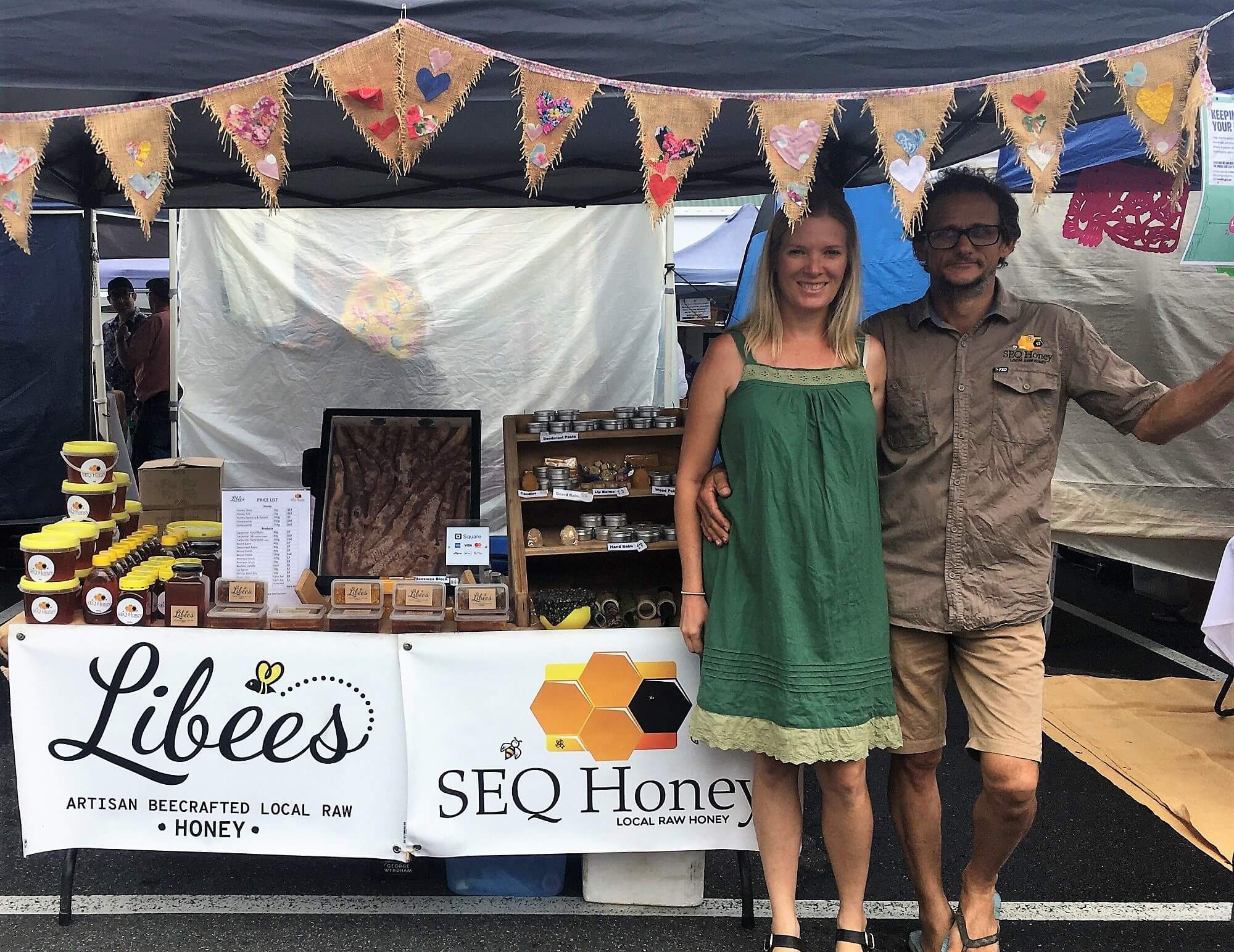
Meet Liby, the self-described “Chief Honey Officer” behind Libees Honey.
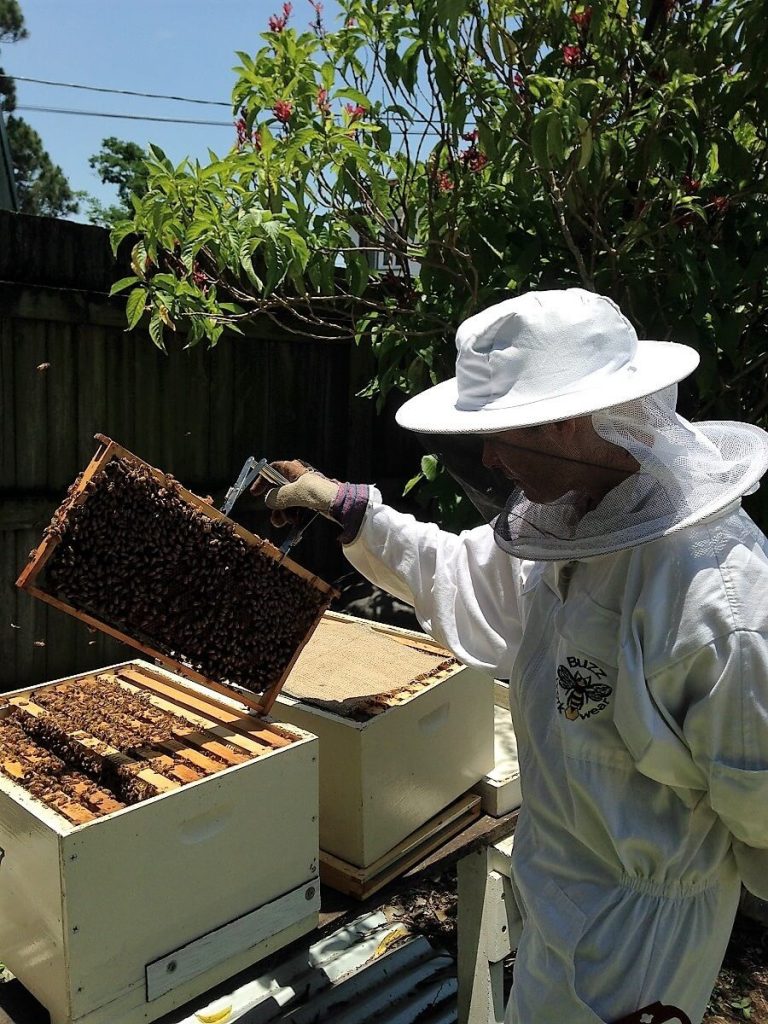
Liby grew up on Highcrest Ave and started the beekeeping journey in 2017 with hives in Mums backyard, even though it’s her mums honey sign out the front and honey distribution cupboard that still stands — and that family connection has unexpectedly turned Highcrest Avenue into something of a local honey hub.
By day, Liby and her partner Craig run their honey operation from a farm north of Gympie, managing more than 200 hives across the area.
Meanwhile, Liby’s mum helps distribute the honey from her Wavell Heights home. At one point, every drum was full from the prolific production of the hives and the local response from a recent leaflet drop across just three Wavell Heights streets created a run on the honey, just in time to create space for another incoming batch.
At around $14 a kilogram for raw honey, locals clearly see value not just in the product itself, but in knowing exactly where it comes from, making Libees Honey one of the suburb’s quiet success stories.
Learning the Hard Way
Photo Credit: Libee’s
Liby’s beekeeping journey started in 2016 with a backyard FlowHive and a determination to learn properly before diving in.
She joined the Northside Beekeepers Association at Lawnton, where she says experienced mentors became invaluable.
“The ancient art of mentoring was the real gold in the raw honey,” she says.
Over time, Liby worked with many retired commercial operators, absorbing knowledge from seasoned producers while building the confidence to eventually launch her own operation.
But the learning curve was steep.
By her own admission, she “killed her first hive” due to American Foul Brood.
Rather than discouraging her, the experience deepened her respect for the complexity of bees and the importance of ongoing education.
Today, she encourages hobby beekeepers to connect with local clubs rather than trying to learn everything online or in isolation.
“It’s amazing to me that many backyard beekeepers don’t join local beekeeping clubs,” Liby says.
“There’s so much knowledge to acquire, especially with new issues like Varroa mite.”
Varroa Mite: Tiny Pest, Big Headache
One of the biggest concerns currently facing Australia’s bee industry is the spread of the Varroa mite — a parasite considered one of the most serious threats to honey bees worldwide.
Liby says unregistered backyard hives can create challenges for the industry because owners may miss critical updates or treatment advice designed to limit the spread.
Bees can travel up to five kilometres, meaning unmanaged infestations can quickly impact nearby registered hives and commercial operations.
For small producers like Liby and Craig, staying informed and connected to the wider beekeeping community is becoming increasingly important.
Liby met Craig in 2018, and together they slowly traded suburban life for a more nature-connected existence.
At one point, Craig had 24 hives squeezed into the backyard of his small North Lakes property before council pressure eventually pushed him to relocate. This was a trigger for the move with Liby.
So they packed up and moved north, buying land near Gympie to build a new lifestyle around bees, sustainability and local food production.
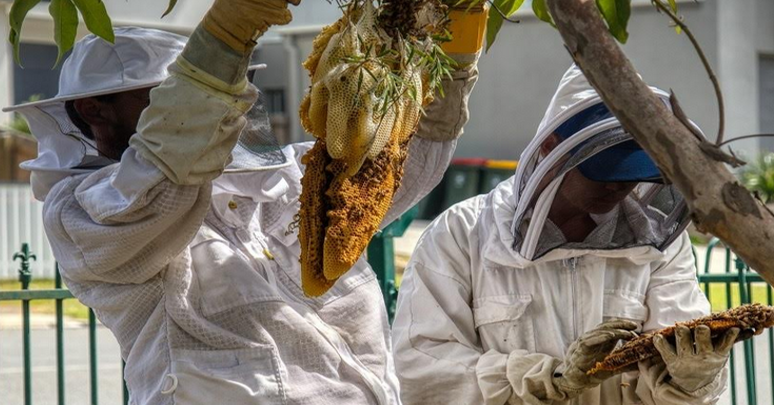
Today, their hives are spread not only across their own property, but also across friends’, family members’ backyards and paddocks, and National Park sites. Craig runs a successful queen bee producer arm of the business focusing on creating a very dark calm bee displaying uncapping and recapping behaviour traits that they are hoping will contribute to faster varroa resistant genetics being spread across the region.
“We believe supporting a local beekeeper where you know your honey is coming from — from bees that are probably sitting on your garden flowers — supports the continuation of small local family-run businesses over big corporations and supports the environment on a micro scale,” Liby says.
“And it tastes better.”
Their business also incorporates a strong sustainability focus, including off-grid solar power for honey extraction, reused packaging materials, Australian-made signage and even hive boxes crafted from camphor laurel trees milled on their own property.
Liby will now be sharing her world with readers through a new monthly column for Wavell Heights News.
Expect stories from behind the hives, insights into bee behaviour, seasonal honey updates, environmental challenges, backyard beekeeping tips and a closer look at the fascinating — and often misunderstood — world of bees.
Like the bees she cares for, Liby has built her honey business the old-fashioned way — through patience, hard work and a whole lot of persistence.
Residents across Wavell Heights may have seen police activity increase in recent days, with one investigation leading to drug-related charges and another focusing on a string of alleged vehicle offences across several streets.
The separate investigations unfolded within a week of each other and involved locations across the suburb, from Pfingst Road to Frankit Street, Calga Street and Vaucluse Street.
Resident Reports Lead to Search Warrant on Pfingst Road
According to the Queensland Police Service, information provided by local residents and Crime Stoppers helped direct attention to alleged drug activity in the Wavell Heights area.
Police executed a search warrant at a Pfingst Road property on June 1 after receiving multiple reports and gathering intelligence. During the search, officers allegedly located cash along with dangerous drugs, including cocaine and methylamphetamine.
A 57-year-old Wavell Heights man was subsequently charged with a number of offences, including supplying dangerous drugs, possessing dangerous drugs and possessing property suspected of being linked to drug offences.
The man was scheduled to appear in Brisbane Magistrates Court on June 8. The charges remain allegations before the court.
Vehicle Offences Reported Across Several Wavell Heights Streets
The incidents occurred at different locations throughout Wavell Heights, affecting residents in Nind Street, Frankit Street, Calga Street and Vaucluse Street.
Police allege a black Volkswagen T-Cross parked at a home in Nind Street was entered overnight, while a white Volkswagen Tiguan parked at a residence in Frankit Street was also targeted. In both cases, the vehicles’ rear reverse-camera handles were allegedly removed.
A red Mazda CX-5 parked in Calga Street was allegedly entered and a garage remote taken, while a silver Haval Jolion parked in Vaucluse Street was reportedly entered and property and cash stolen.
Stolen Kia Sighted Near Multiple Investigation Sites
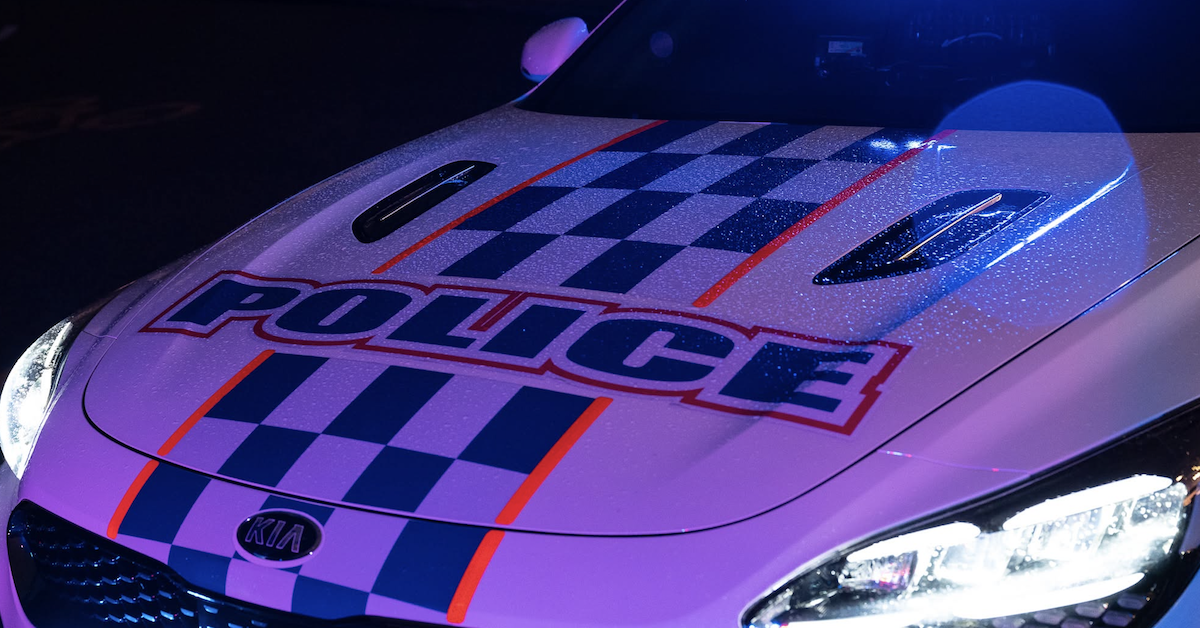
Investigators are also seeking information about a grey Kia Sportage reported stolen from Albion on the morning of June 7.
Police said the vehicle was sighted in Frankit Street around the time one of the alleged offences occurred and was later seen in Calga Street, where another vehicle was allegedly entered.
The Kia remains outstanding and police are continuing inquiries into whether it may be connected to multiple incidents under investigation.
As inquiries continue, police are encouraging residents to take steps to reduce opportunities for vehicle theft and break-ins.
Queensland Police advise motorists to lock vehicles, secure valuables out of sight and use garages or off-street parking where possible. Residents are also encouraged to report suspicious activity through Policelink or Crime Stoppers.