


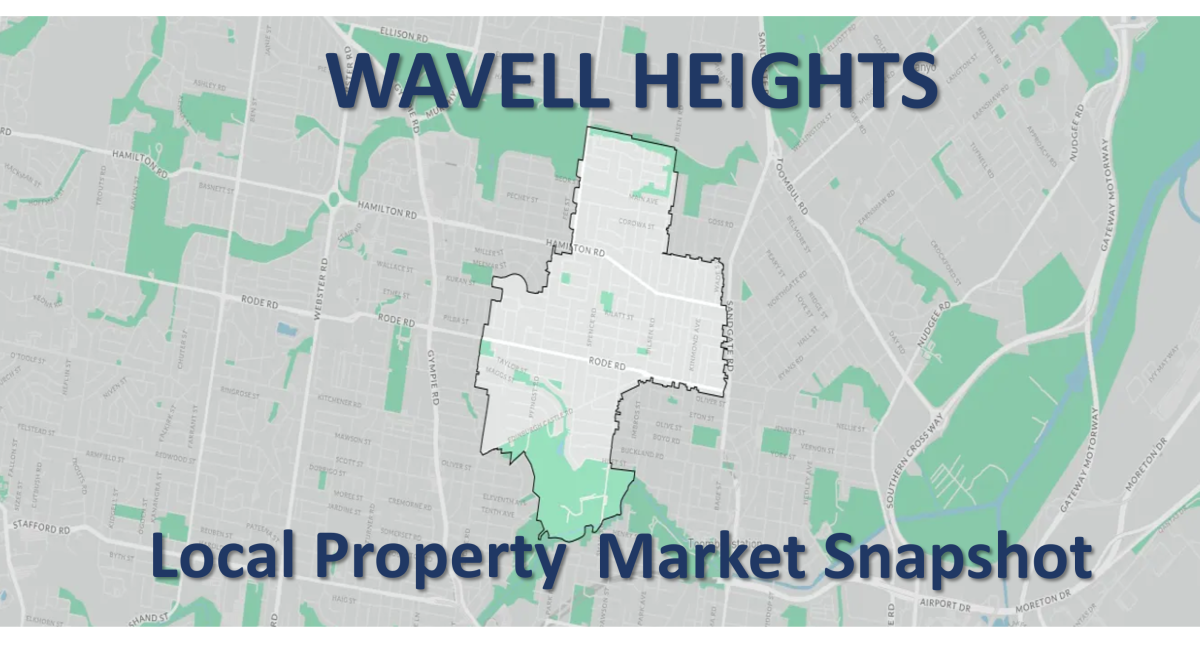
Wavell Heights : Local Property Market Snapshot

Wavell Heights News is delighted to welcome Stefan Blee as our Monthly Local Expert Columnist.

Stefan came from outside the property industry, having had a long career as a chef in various parts of the world.

A former tennis player “until my eyes went bad,” he also continues to support Shaw Park tennis centre.

Very easy to talk to, knowledgeable and oozing integrity, we can see why he was awarded the RMA Agent of the Year for Wavell Heights in 2026.

Stefan Blee Wavell Heights
WAVELL HEIGHTS NEWS: So Stefan, what’s your overview on the Wavell Heights Property Market?
STEFAN: Well, Wavell Heights was once dairy and pineapple farms, subdivision began on a small scale in 1917 then post-war it constantly expanded.

The median age in Wavell Heights has increased from 31 in 1991 to 39.5 in 2026, according to SQM Research for 4012 which also takes in Nundah.

Wavell Heights is now considered on the edge of the Inner North and as such, has to be one of the larger suburbs in North Brisbane.

It measures almost 2.5km from east to west and north to south with 3 strong ridgelines — one with city views; one with northern views; one with western views; and remarkably, there are even some homes in Wavell Heights with bay views. There are also now an increasing number of great family properties outside the ridgeline areas.

The area has a great range of schools with Padua College and Nudgee College catering for boys; St Rita’s and Mt Alvernia for girls; Clayfield College, Wavell Heights State School, and Wavell State High School offering very strong co-ed options.

I started selling in Wavell Heights in 2019. The market has changed so much since then. There are an increasing number of new builds and we have been fortunate enough to sell several of them in recent times.

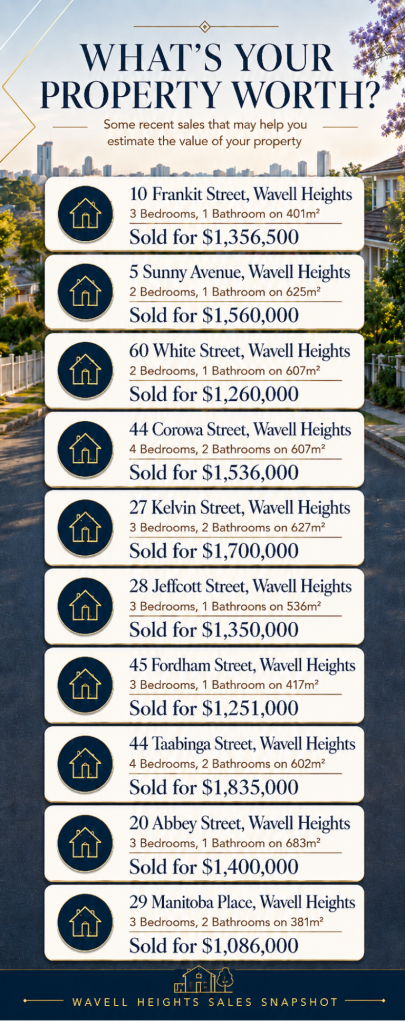
48 Stadcor Street was our most recent new build sale. It sold after the first open home. 41 Frankit Street and 117 Bilsen Road were two other new builds we have sold recently.

Most of the Wavell Heights housing stock is post WW2, commonly 1950s and beyond, well-built, solid houses on 600-sqm blocks.

Did you know that until 1941 the area we now know as Wavell Heights was then known as West Nundah, until a poll of residents chose to name the area after Field Marshall Archibald Wavell?

The age of the properties here is also a major asset to developers and buyers compared to neighbouring Kalinga and Wooloowin where the character home is more common, requiring a more conservative approach with planning around heritage preservation.

We are just in the process of launching 26 Frankit Street, the 4th home we have listed on Frankit Street, which has a lovely streetscape.

While Field Marshall Archibald Wavell provided the name for the area, early German settlers called the Pfingst family bought 10 acres as far back as 1866 for 10 pounds, then after the land had been handed down through the family, a farmhouse was built on what was known as Hillcrest Avenue in 1936.

Hillcrest Avenue was renamed in 1975 to be Highcrest Avenue. Pfingst Road connecting Rode Road to Hamilton Road was named after the family.

Stefan Blee
Stefan Blee Agent of the Year

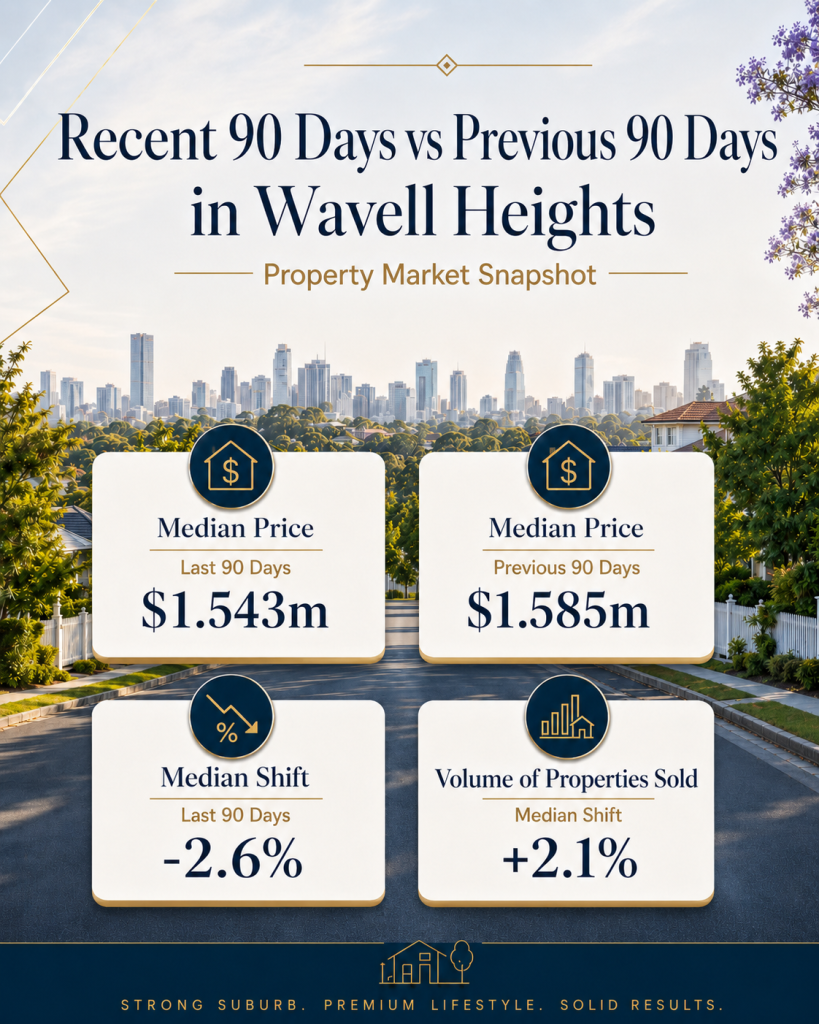
The Property Market


12-Month Analysis

Monthly median sale price

May 2025 – May 2026
Median price
Mean price
Sales volume
Period median $1.54M
Period high Aug ’25 · $1.75M
Period low Sep ’25 · $1.32M
Total sales 230
Drag to zoom date range Full period
Seasonal pattern: Aug 2025 peak ($1.75M) aligns with typical Brisbane spring premium. The Sep dip to $1.32M reflects spring-entry lag before a Nov–Feb recovery phase. May 2026 softness partly reflects unregistered recent settlements.

Median price by bedroom count

12-month · 213 priced sales with bedroom data
Dominant type 3-bed · 86 sales
5-bed premium vs 4-bed +61%
5-bed premium vs 3-bed +79%
Entry point (2-bed) $818.5K
Two distinct buyer pools: The step from 4-bed ($1.548M) to 5-bed ($2.5M) is not incremental — it’s a 61% premium jump representing an entirely different segment. 3-bed at $1.4M remains the volume sweet spot (40% of all sales).

Median price by land size

12-month · 224 sales with land area data
Most common size 600–700 m² · 100 sales
Median block (suburb) 607 m²
400–500m² vs 500–600m² +25% premium
400–500 m² anomaly: Subdivided lots in this range ($1.805M median) outperform the larger 500–600 m² tier ($1.443M) by 25%. Likely reflects newer builds and knock-down-rebuild demand attracting a premium over older stock on bigger blocks.

Days on market distribution

12-month · 185 sales with DOM data
Median DOM 27 days
Mean DOM 50 days
Sold within 30 days 55% of sales
Longest sale 370 days
Bimodal market: The sharp cluster under 30 days (101 sales, 55%) points to correctly priced properties moving fast. The long tail beyond 90 days (25 sales, 14%) reflects overpriced listings that eventually find their level — pulling the mean well above the median.
Wavell Heights QLD 4012 · Generated May 2026

Some Development Applications in Wavell Heights

Click on the pins to view the details. Click +/- to zoom in/out

Published 30-May-2026

Stefan Blee is a Proud Promotional Partner of Brisbane Suburbs Online News

Note: This article is based on data from publicly available sources at the time of publication and is intended for general information only. Readers should conduct their own research and seek independent advice before making any property decisions.

Pfingst Farmhouse in Wavell Heights: A Local Heritage Treasure

Sitting quietly on Highcrest Avenue, the Pfingst Farmhouse is a well-loved link to the early days of Wavell Heights.

Built in 1936 by Friedrich George Pfingst, this classic Queenslander-style home has witnessed the suburb’s transformation over the years.

A Slice of Wavell Heights History 

The Pfingst story starts with Hermann Pfingst, who arrived from Germany in 1863 aboard the Beausite. A few years later, in 1866, he bought 10 acres of crown land in what was then called German Station. The area was home to German settlers who had followed missionaries to Zion’s Hill back in 1838.

Mr Pfingst’s land, known as Portion 580, stayed in the family. However, by July 1927 Mr Pfingst passed away and by 1932, Friedrich George Pfingst took ownership and built the farmhouse in 1936. It was positioned facing what was then Hillcrest Avenue (now Highcrest Avenue) and became the centre of the family’s smaller property.

The Farmhouse’s Classic Design 

The Pfingst Farmhouse ticks all the boxes of classic Queenslander architecture: elevated stumps for airflow, timber walls, and a corrugated iron roof. These weren’t just design choices—they were practical solutions for dealing with heat, humidity, and heavy rains.

The wide verandahs and weatherboard construction give the home its timeless character while keeping the space cool and breezy during Brisbane summers. It’s a design that’s both smart and charming, a reflection of early 20th-century craftsmanship.

Why It’s Heritage-Listed 

In 2003, the Pfingst Farmhouse was officially listed as a Local Heritage Place. This recognition celebrates both its architectural value and its connection to one of Wavell Heights’ early pioneering families.

After World War II, the suburb saw major changes. In 1946, most of the original 10-acre farm was acquired by the Queensland Housing Commission for new residential development. The farmhouse and remaining land stayed with the Pfingst family until 1957.

More Than Just a House 

The Pfingst Farmhouse isn’t just an old building—it’s a piece of Wavell Heights’ story. Its design speaks to a time when homes were built with care and intention, and its history highlights the resilience of one family who helped shape the suburb.

For locals, it’s more than just a landmark—it’s a reminder of where Wavell Heights came from. And for those who love history, it’s a rare example of the city’s interwar architecture still standing strong.

Pfingst Farmhouse renovation
Photo Credit: RayWhite
Pfingst Farmhouse blueprint
Photo Credit: RayWhite

The farmhouse recently changed hands, with the sale managed by real estate agent David Treloar of Ray White. As Wavell Heights continues to grow and change, the Pfingst Farmhouse remains a quiet connection to the suburb’s roots—a storybook in timber and tin for those who stop to notice.

Published 28-May-2026

Two Nurses in Wooloowin Reveal How Healthcare Has Changed

Inside a Wooloowin aged care home near Wavell Heights, two nurses from different generations are sharing stories that show how dramatically healthcare has changed over the past 60 years. One remembers treating patients during the final years of the polio epidemic, while the other now works with electronic medical records and ongoing digital training in modern aged care.


International Nurses Day is held annually on May 12.

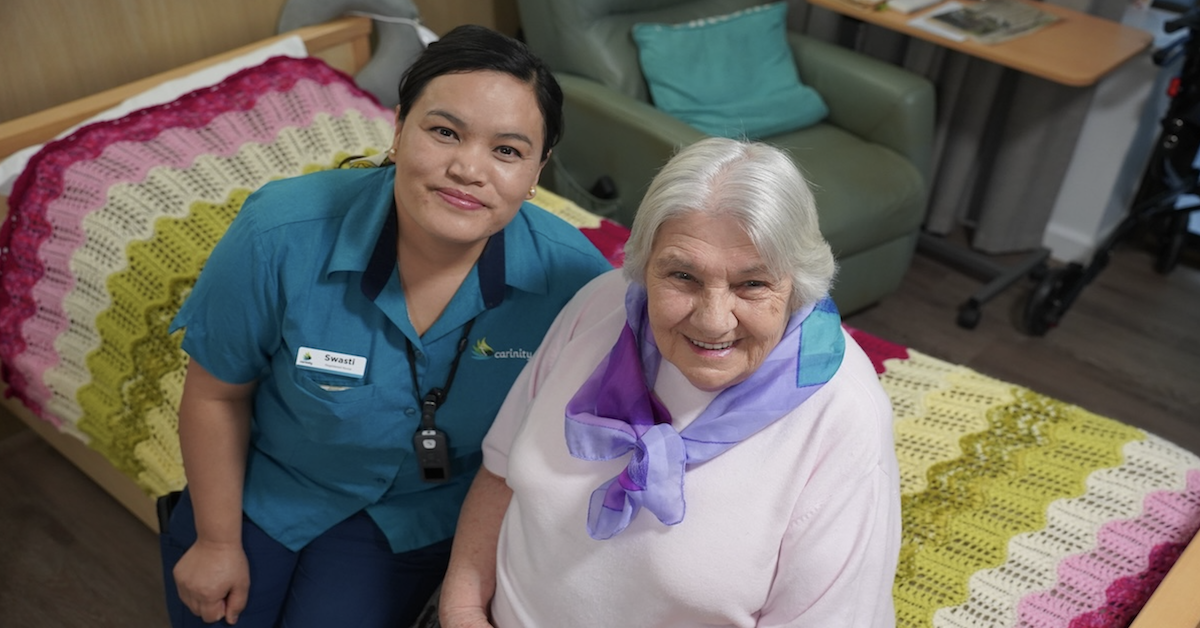
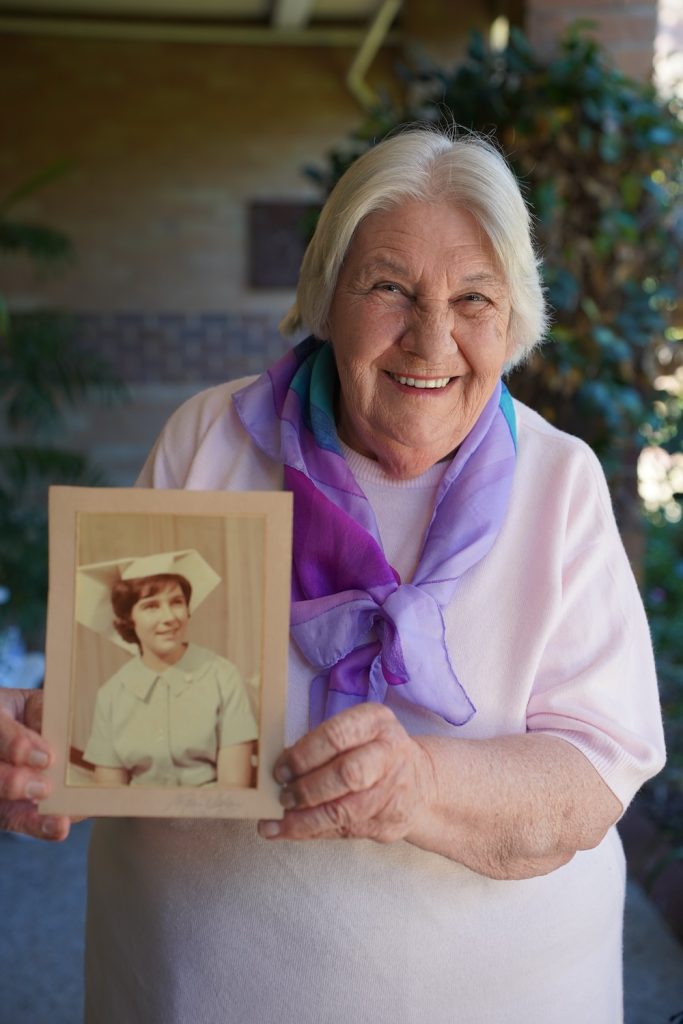
The contrast between the experiences of former nurse Marjorie Davidson and clinical nurse Swasti Gurung has become part of daily life at Carinity Clifford House in Wooloowin, where both women have spent time caring for older Australians in different stages of their careers.

Davidson began nursing in 1959, entering hospitals at a time when disposable medical equipment did not exist and infectious disease wards still treated tuberculosis and meningitis patients.

She recalled working with iron lungs during the final years of the polio epidemic and sterilising reusable needles over boiling water heated by wood stoves. Hospital workers also manually cleaned large copper tubs used for infected linen during afternoon shifts.

Photo Credit: Supplied

From remote clinics to Brisbane’s northside

After starting her career in Victoria, Davidson spent 13 years nursing in remote parts of Papua New Guinea, caring for patients suffering from malaria, chest infections and severe skin diseases.

Medical conditions in isolated areas were difficult, with limited supplies and long distances between communities. Crocodiles and heavy mosquito populations were common around the clinics where she worked.

Many of the tools younger nurses rely on today were unavailable at the time.

Now retired and living in Wooloowin, Davidson has watched nursing shift from handwritten paperwork and reusable equipment to computer systems and advanced medical technology.

A new generation enters aged care

For Gurung, nursing followed a very different path.

She started her career in Nepal before moving to Australia and retraining for aged care work in Brisbane. Before joining the Wooloowin facility, she worked in hospital wards assisting with endoscopy and colonoscopy procedures.

Gurung now works in a healthcare system built around digital records, regular technology updates and lifting equipment designed to improve safety for both staff and residents.

She said aged care nursing created opportunities to build lasting relationships with older residents while hearing stories from earlier generations.

That connection between past and present has become one of the defining parts of life inside the Wooloowin facility.

International Nurses Day shines light on changing profession

Healthcare workers across Australia are preparing to recognise International Nurses Day this month, with aged care staff in Brisbane’s north reflecting on how quickly the profession has evolved within a single generation.

At the Wooloowin home, stories from nurses trained decades apart continue to cross paths each day — from tropical clinics using sharpened needles to modern facilities relying on digital healthcare systems.


Published 12-May-2026

E-Scooter Safety Concerns Continue Across Wavell Heights and Brisbane’s Northside

E-scooters remain a familiar sight around Wavell Heights and neighbouring northside suburbs, but ongoing concerns about rider behaviour, speed and serious injuries continue to fuel debate about how safely the devices are being used in suburban areas.

A Queensland-led study involving trauma specialists and researchers found a significant number of riders injured in crashes were travelling above the legal 25km/h speed limit, with many presenting to hospital emergency departments with head and facial injuries.

The findings have kept pressure on policymakers and safety advocates to examine whether current rules, infrastructure and protective equipment are keeping pace with the rapid growth of e-scooter use across Brisbane.

Speed and rider behaviour remain key concerns

The study, supported by RACQ and clinicians at the Royal Brisbane and Women’s Hospital, identified a strong connection between higher speeds and more severe injuries.

Researchers found privately owned e-scooters were more frequently linked to serious crashes, prompting renewed discussion around compliance with speed restrictions and rider behaviour.

Medical professionals involved in the research have continued to stress the importance of basic safety measures, including wearing helmets, avoiding riding while impaired and slowing down in shared pedestrian areas.

For suburbs like Wavell Heights, where scooters regularly move through local shopping strips, suburban streets and shared pathways, concerns have centred on how riders interact with pedestrians, cyclists and motorists in tighter community spaces.

Questions raised about helmet protection

Although helmet use among riders is relatively common, specialists say many injuries still involve significant facial trauma caused by riders being thrown forward during crashes.

That has sparked wider discussion about whether standard bicycle-style helmets provide enough protection for higher-speed e-scooter use.

Some safety advocates have pushed for stronger protective gear, including full-face helmets, particularly for privately owned devices capable of travelling faster than rental scooters.

Safer scooter designs under discussion

Attention has also turned to scooter design itself, with seated e-scooters increasingly being explored as a potentially safer alternative to traditional stand-up models.

The lower centre of gravity offered by seated scooters is believed to improve stability and reduce the likelihood of riders being thrown forward during sudden stops or collisions.

Some operators have already trialled seated models in parts of Brisbane, although transport groups note the larger designs may not suit every urban environment or pathway network.

Infrastructure still seen as a major factor

Beyond rider behaviour, advocacy groups including Bicycles Queensland continue to argue that safer infrastructure is critical to reducing crashes and conflicts.

Dedicated lanes, clearer separation between pedestrians and riders, and better-maintained pathways remain central to discussions about improving safety outcomes across Brisbane suburbs.

In areas across the northside, including Wavell Heights and surrounding communities, the growing use of micro-mobility for short trips has increased pressure on existing shared pathways and local transport connections.

A debate likely to continue

As e-scooter use becomes more common across Brisbane’s northside, the debate appears to be shifting away from whether the devices belong in suburban communities and toward how they can be integrated more safely.

With riders, pedestrians, councils, researchers and transport authorities all weighing in, questions around speed, infrastructure and rider responsibility are likely to remain part of the conversation for some time yet.

Published 10-May-2026

Source: Jamieson Trauma Institute study findings and associated stakeholder commentary

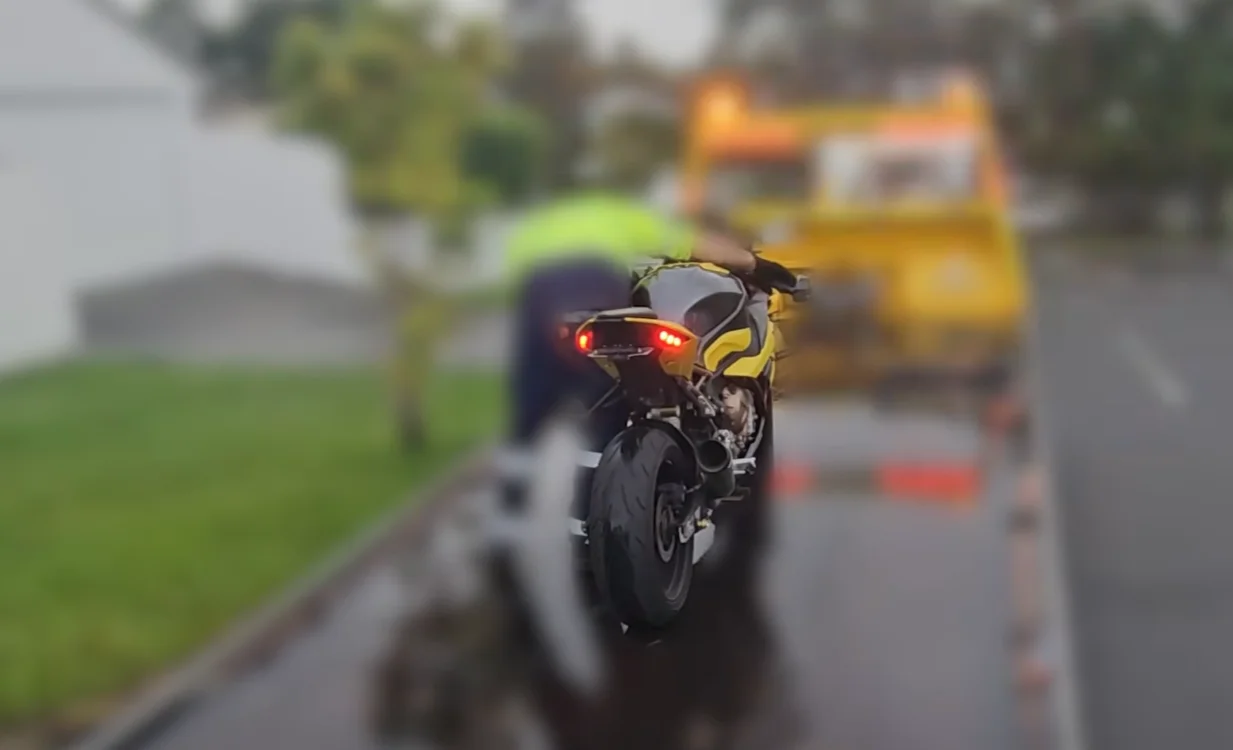
Carina Man Charged After Alleged High-Speed Motorcycle Incident In Virginia

A 25-year-old Carina man has been charged with multiple traffic offences after an alleged high-speed motorcycle incident on major roads in Virginia.


Police allege the rider was observed on 21 February speeding, travelling through red lights and operating the motorcycle dangerously. The motorbike was allegedly recorded travelling at more than 120km/h.

Alleged Evasion On Sandgate Road

Police attempted to intercept the motorcycle after the alleged riding behaviour was observed.

The rider stopped on the side of Sandgate Road, but police allege he then left the location, evaded officers and accelerated to speeds above 150km/h.

Further investigations were carried out by officers from the Road Policing Task Force.

Virginia motorcycle charges
Photo Credit: QPS/YouTube

Motorcycle Seized At Seven Hills Property

Officers executed a search warrant at a Seven Hills address on 9 March.

The motorcycle was located at the property and seized as part of the investigation.

The 25-year-old Carina man was charged with one count each of dangerous operation of a vehicle, failing to have proper control of a vehicle, stopping on a red traffic light over the stop line, failing to ensure each number plate was properly attached to the vehicle, failing to remain at a place, disobeying the speed limit and driving a defective light vehicle on a road.

Brisbane Court Matter Adjourned

The case was heard in Brisbane Magistrates Court on 28 April and adjourned until 27 May.

The charges remain before the court.

Wavell Heights
Photo Credit: QPS/YouTube

Police have again urged road users to slow down, stay alert and drive carefully, warning that speeding, distraction, fatigue, impaired driving and failing to wear a seatbelt can put lives at risk.

As part of Operation Interpose, police are continuing high-visibility patrols and enforcement aimed at deterring dangerous driving behaviour.


The Virginia matter remains before the court, with the next listed date set for 27 May.

Published 8-May-2026

The Hidden History of the Veteran Who Built a Wavell Heights Empire

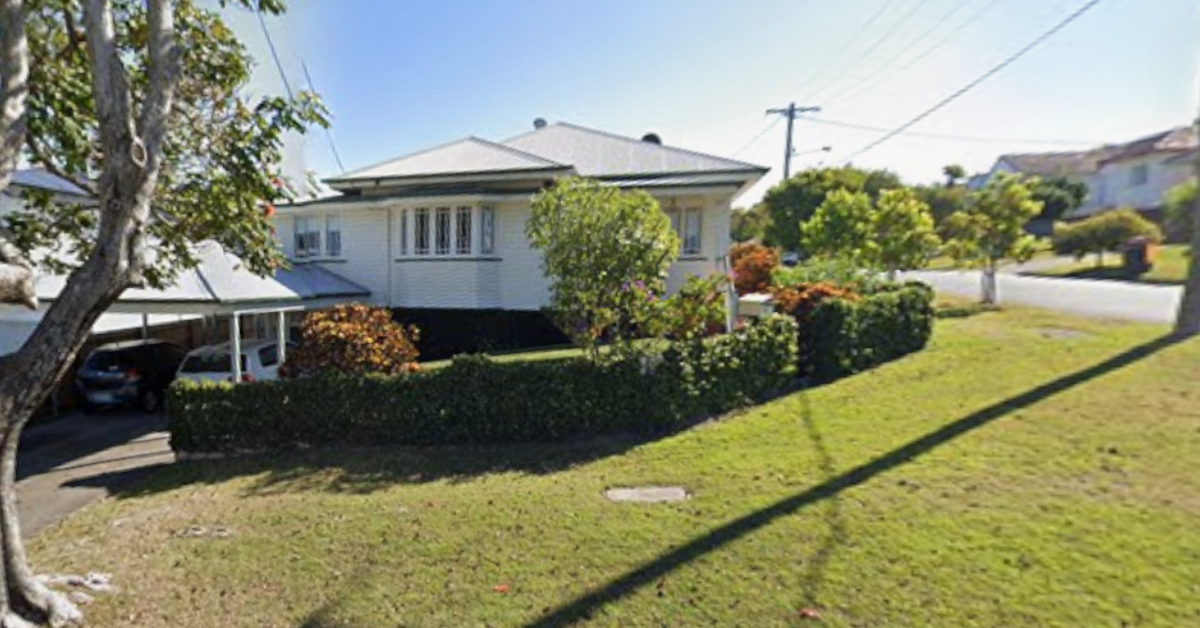
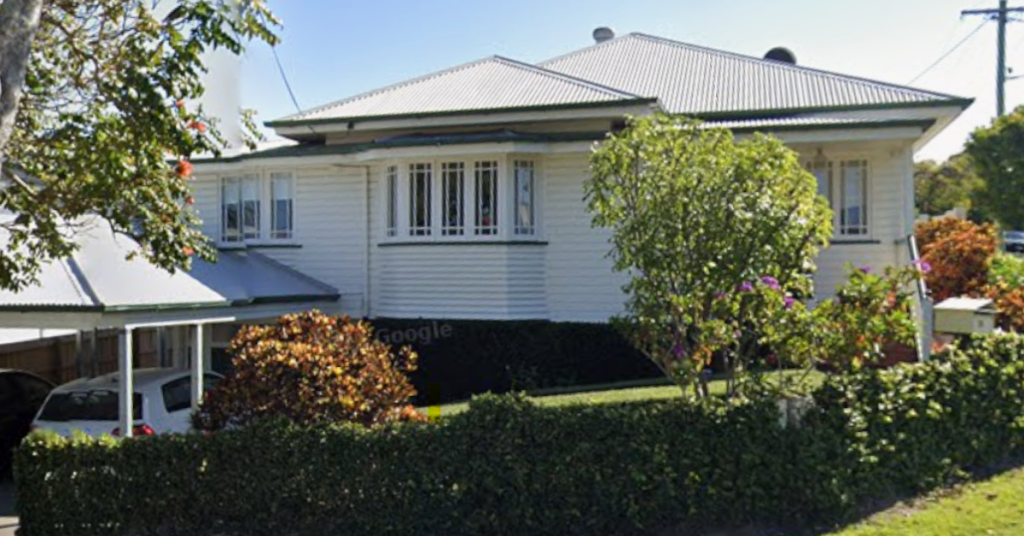
The iconic local landmark known as the Hamlin House is at the centre of a historical mystery after modern research proved the home was actually built by a different family over a decade earlier than official records ever suggested.


The Detective in the Archives

While the community has long believed the large home on O’Donnell Street was built in 1928, architectural historian Marianne Taylor recently found evidence that changes the entire story. By examining old title deeds, Taylor found a specific stamp from the Workers Dwellings Board. This discovery shows that the house was actually finished around late 1916 or early 1917. 

The records reveal that Andrew and Agnes Lonie were the true original owners who moved onto the land long before the suburb even had its current name. This shift in the timeline means the house stood through the end of the First World War and saw the neighborhood transform from rough bushland into a modern residential area.

A Hero Returns Home

Even though he did not build the house, Frederick Hamlin remains a massive part of the local identity. As a veteran of the First Australian Imperial Force, Hamlin returned from the war and used a specialized loan for soldiers to buy the property in 1920. The house itself was a bit of a rebel for its time because it did not follow the trendy styles of the 1920s. 

Instead, it was built as an asymmetrical bungalow with a roof that swept down over the front porch and featured unique triple windows. It was much larger than most houses built for veterans, likely because the Hamlin family needed the extra space for their growing number of children.

From Bushland to Flower Beds

Photo Credit: Google Maps

Before the area became the busy suburb of Wavell Heights, it was known as West Nundah and was mostly filled with pineapple farms and dairy cows. The Hamlin family helped change the face of the district by starting a nursery business right in their backyard. This business eventually became one of the biggest in the region, especially during the building boom after the Second World War. 

As new families moved into the area, they visited the Hamlins to buy award-winning flowers and shrubs to decorate their new front yards. Local experts believe that many of the old, beautiful trees still standing in the suburb today probably started as small seedlings in the Hamlin nursery.

The Name that Stayed

The suburb we know today only got its name in 1941 during a patriotic concert at the Imperial Theatre. While planners originally thought about calling the area Beverly Hills, they chose to honour General Sir Archibald Wavell instead. Through all these changes, the house at 35 O’Donnell Street stayed in the Hamlin family for nearly 60 years. 


Even though the “House Detective” has now proven the Hamlins weren’t the first ones to live there, their long history of gardening and community service is likely why everyone forgot about the original 1916 builders. The home remains a sturdy piece of the past that connects the early farming days to the modern streets of today.

Published Date 28-April-2026

Norths Rugby Club Reels After Alleged String of Ten Break-Ins in 18 Months

The Norths Eagles rugby club is facing a mounting financial and emotional toll following a series of alleged break-ins at their Hugh Courtney Oval clubhouse. “The Nest” has been hit at least ten times in the last 18 months, with the most recent blow involving three consecutive nights of alleged thefts and property damage that have left club volunteers struggling to keep up with repairs.


CCTV footage from the clubhouse shows groups of young people inside the facility on multiple occasions, taking soft drinks, packaged goods, and bottled water. The most recent run of three consecutive night break-ins has added to a financial toll that club president Shaun McKinnon estimates included $1,300 in goods lost in a single incident alone.

Beyond the stolen stock, the alleged offenders have set the club’s wooden outdoor tables alight on multiple occasions, destroying custom-made property that cannot simply be replaced off a shelf.

The club, known to members and supporters as The Nest, is one of Brisbane’s most historically significant rugby union clubs. Tracing its origins to the Teachers Training College Football Club in 1933, Norths has spent more than 90 years developing players at every level, from juniors through to Wallabies, with alumni including Will Genia, Greg Cornelsen and Michael O’Connor. It competes in the Queensland Premier Rugby competition, the highest level of club rugby in the state below Super Rugby.

The Pattern the Club Keeps Seeing

What frustrates club officials is not just the frequency but the consistency of the method. McKinnon says the alleged intruders access the clubhouse the same way each time, finding the same entry point regardless of security improvements. Each repair and upgrade is followed by another break-in using the same approach, creating a cycle that drains both money and morale.

One incident about a month ago unfolded differently. A community member arrived at the club at around 7:00 pm to drop off supplies and spotted a group of young people on the roof of the clubhouse. Police responded quickly, but as officers arrived, the alleged offenders fled on e-bikes, heading onto the Kedron Brook Bikeway and disappearing before police could locate them.

That detail connects to a broader pattern in the area. Police have been conducting targeted operations along the Kedron Brook Bikeway in recent years in response to complaints about the use of non-compliant and unregistered electric bikes, including enforcement action involving young people. The bikeway, which runs almost 20 kilometres from Mitchelton to Nundah and passes close to Hugh Courtney Oval, provides rapid movement through the northern suburbs and has featured in incidents extending well beyond the Wavell Heights area.

A Community Club Absorbing Costs It Was Never Built to Carry

Norths Eagles operates, like most community rugby clubs, on tight margins that depend heavily on match-day income, bar and canteen takings, memberships and sponsorships. The Australian Sports Foundation has noted that the club’s infrastructure and facilities depend significantly on grant funding, given the difficulty of funding capital upgrades through operating revenue alone. Against that backdrop, repeated losses to theft and property damage are not a minor inconvenience. They represent a direct hit to the resources the club uses to run junior programmes, maintain fields and support its players.

McKinnon has called on the Wavell Heights and broader northern suburbs community to back the club in a practical way: come out to home games at Hugh Courtney Oval during the Queensland Premier Rugby season, and support the bar and canteen while there. For a club that has been running in this community for over nine decades, the ask is a reminder that local sporting clubs survive on local support, and that support matters most when things are difficult.

How to Back the Eagles

Norths Eagles play their home games at Hugh Courtney Oval, 128-150 Shaw Road, Wavell Heights. The 2026 Queensland Premier Rugby season is currently underway. Fixture information, news and sponsorship enquiries are available via the club’s website at northsrugbyclub.com or through their Facebook page. Anyone with information about the alleged break-ins can contact Policelink on 131 444 or report anonymously through Crime Stoppers on 1800 333 000.


Published 17-April-2026

Hamilton Road Intersection Upgrade Set to Improve Safety at Wavell Heights Crossing

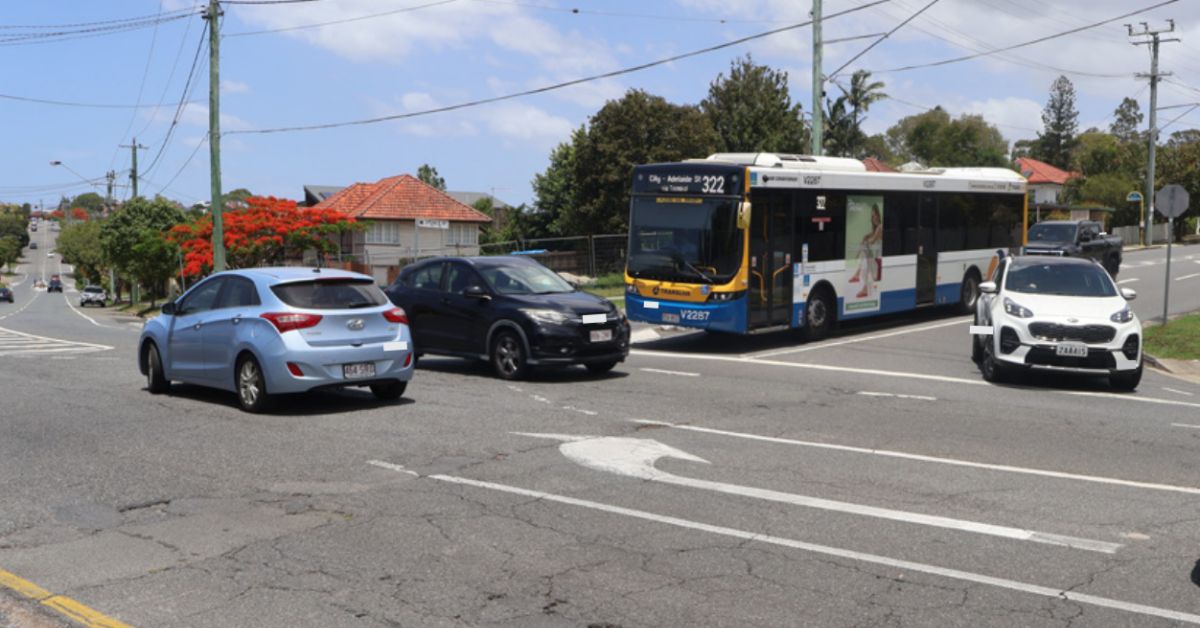
Traffic lights are coming to the Hamilton Road and Spence Road intersection in Wavell Heights, with plans lodged to overhaul one of the suburb’s busiest and most hazardous daily crossing points.


The Hamilton Road and Spence Road intersection carries heavy traffic throughout the day, with long wait times and limited visibility making it difficult for drivers to safely enter and exit Spence Road. The planned upgrade will install traffic signals at the intersection, along with a series of improvements designed to make the crossing safer and more reliable for drivers, pedestrians and bus passengers alike.

The project is currently in progress, with the construction timeline still being finalised pending funding confirmation.

What the Upgrade Involves

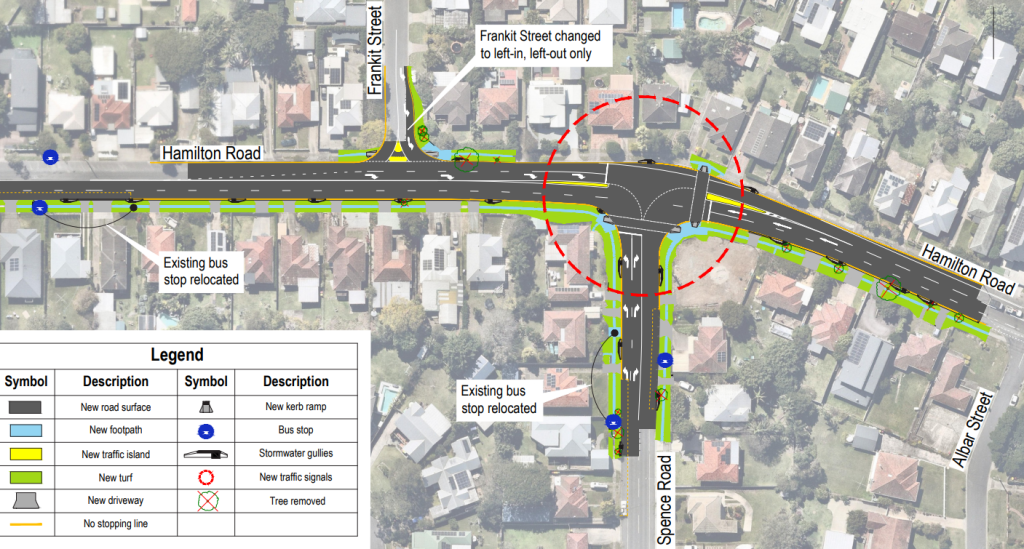
The centrepiece of the works is a full set of traffic signals at the intersection, including signalised pedestrian crossings. The right-turn lane on Hamilton Road into Spence Road will be extended, and both corners of Spence Road at Hamilton Road will be widened to formalise two westbound traffic lanes on approach to and through the intersection.

Photo Credit: BCC

Bus stops will shift as part of the works. The westbound stop on Hamilton Road (stop 43) moves 30 metres west, and the northbound stop on Spence Road (stop 42) moves 30 metres south. Footpaths will be upgraded, new kerb ramps installed, and stormwater infrastructure on both roads within the project area will be renewed. New road pavement, signage, line marking and landscaping complete the scope.

One change will be permanent from the outset: access from Frankit Street onto Hamilton Road will become left-in, left-out only. A new pedestrian refuge on Frankit Street at Hamilton Road will also be installed. Residents who currently turn right out of Frankit Street will need to adjust their routes once construction begins, and the project team is available to discuss alternative travel options.

A Corridor with a History of Safety Concerns

Hamilton Road has been a focus of road safety investment for several years. The intersection with Bilsen Road was upgraded under the Black Spot Program after recording nine crashes between 2015 and 2021, all of which required medical treatment or hospitalisation. That project delivered dedicated right-turn pockets, updated signal phasing and relocated bus stops, and is now complete.

The Spence Road intersection presents a similar set of challenges. High traffic volumes, extended wait times and limited sightlines have made it difficult for drivers to safely navigate the crossing, mirroring the conditions that prompted action at Bilsen Road.

A Safer Street for the People Who Use It Every Day

For residents living near the intersection, this upgrade addresses a problem that has been part of their daily routine for years. Hamilton Road serves as one of the key east-west connectors through Wavell Heights’ inner north, and the Spence Road junction has long added unnecessary time and uncertainty to morning and afternoon trips.

The inclusion of signalised pedestrian crossings is a meaningful addition for those who travel the area on foot, where crossing Hamilton Road currently requires careful judgement and a degree of patience.

Broader traffic studies have pointed to ongoing pressure across Wavell Heights roads, with congestion on surrounding arterials including Sandgate Road and Gympie Road continuing to push traffic onto local streets. Intersection-level upgrades like this one address safety at specific points, and combined with previous works along the corridor, represent a sustained effort to improve conditions for the community.

How to Stay Across the Project

The construction program is still being finalised, and more detail on timing will be shared once that process is complete. Residents can register for project update emails through this link.

For questions, including advice on alternative routes around the Frankit Street access change, contact the project team on 07 3178 5413 (Monday to Friday, 8.30am to 4.30pm), or email cityprojects@brisbane.qld.gov.au with the subject line “Hamilton Road and Spence Road intersection upgrade.” Written enquiries can be directed to Infrastructure Services, GPO Box 1434, Brisbane QLD 4001. General enquiries can be made to 07 3403 8888, available 24 hours a day, seven days a week.


Published 31-March-2026

Wavell Heights Student Zahra Patel Named Runner-Up at 2026 WIMARQ Resources Awards for Women

Wavell State High School Year 12 student Zahra Patel has been named runner-up in the Exceptional Female QMEA Student Award at the 2026 Women in Mining and Resources Queensland International Women’s Day Luncheon and Resources Awards for Women, recognising years of dedication to STEM pathways and the resources sector.


Zahra attended the Brisbane luncheon alongside fellow Wavell student and University of Queensland Science Ambassador Nia Benson and teacher Mr Drago, representing a school that has been part of the Queensland Minerals and Energy Academy since its founding in 2005. The event brought together industry leaders, keynote speakers and students from across Queensland to celebrate the contribution women are making to the resources and energy sector. Attendees heard from keynote speaker Claire Parkinson, a former mining executive and prison governor, who shared insights on leadership and career resilience.

The runner-up recognition in the Exceptional Female QMEA Student category reflects Zahra’s sustained involvement in STEM opportunities over many years, rather than a single standout achievement. She celebrated the result with her family, who were present at the luncheon. Zahra is also a participant in the WIMARQ Mentoring Program, which pairs female Year 12 students with women working in the resources sector, providing one-on-one guidance and professional support as they complete their final year of school and plan for what comes next.

What the QMEA Pathway Offers Students

The Queensland Minerals and Energy Academy is designed to encourage students to enter careers in the minerals and energy sector, providing clear pathways into one of the state’s most innovative and economically important industries. As Australia’s largest industry-led initiative, QMEA bridges education and industry, inspiring students to pursue pathways in the resources sector and STEM fields through innovative programmes that prepare students for future careers and support teachers in delivering engaging STEM education.

Wavell State High School has been a foundation partner school of the QMEA since the academy’s inception in 2005. That two-decade relationship has given Wavell students consistent access to mine site excursions, engineering camps, curriculum-linked forums, industry mentoring and nationally recognised qualifications in resource and infrastructure operations. QMEA Ambassadors, like Zahra, take on additional leadership responsibilities within the programme, representing their school at major industry events and promoting resources and STEM careers to younger students.

The results of the QMEA model are measurable. Female students at QMEA schools who entered a post-school apprenticeship or traineeship did so in the mining industry at almost five times the rate of students from non-QMEA schools. For young women in particular, the combination of industry exposure, mentoring and peer networks that QMEA and WIMARQ provide significantly changes the likelihood of pursuing a career in a sector that has historically underrepresented them.

WIMARQ and the Mentoring Programme

The Women in Mining and Resources Queensland organisation works to attract, retain and advance women across Queensland’s resources sector through advocacy, events and structured mentoring. The WIMARQ Mentoring Program that Zahra participates in pairs selected female Year 12 students with experienced women from the resources industry, creating a direct line of connection between school life and professional careers. For students navigating the transition from Year 12 into university, apprenticeships or employment, that kind of personal guidance from someone already working in the field carries practical value that no classroom programme can replicate.

The International Women’s Day Luncheon and Resources Awards for Women is the centrepiece event of WIMARQ’s annual calendar, drawing senior industry figures and student participants from across Queensland together to recognise excellence and build the networks that sustain women’s participation in the sector over the long term.

Why This Matters to the Wavell Heights Community

For families in Wavell Heights and the surrounding northern Brisbane suburbs, Zahra’s recognition is a reminder that Wavell State High School offers its students access to opportunities that extend well beyond the standard secondary curriculum. The school’s two-decade partnership with the QMEA has opened doors for hundreds of Wavell students into careers in engineering, resources, energy and related STEM fields, and Zahra’s runner-up award is one of the most visible expressions of what that partnership can produce.

For young women in the community who are weighing up their options beyond Year 12, the combination of QMEA membership, WIMARQ mentoring and industry events like the International Women’s Day Luncheon represents a genuine pathway into one of Queensland’s most economically significant sectors. Queensland’s resources sector contributed $116.8 billion to the state economy in the most recent financial year and supports the jobs of more than 532,000 Queenslanders, making the pipeline of skilled graduates into the sector a matter of real economic importance for the state.

Students at Wavell State High School interested in the QMEA programme can speak with their school’s QMEA coordinator, or find more information at qmea.org.au. Information about the WIMARQ Mentoring Program is available at wimarq.com.au.


Published 13-March-2026.

Wavell Heights Bin Complaints Add Pressure After City Acknowledges Service Slips

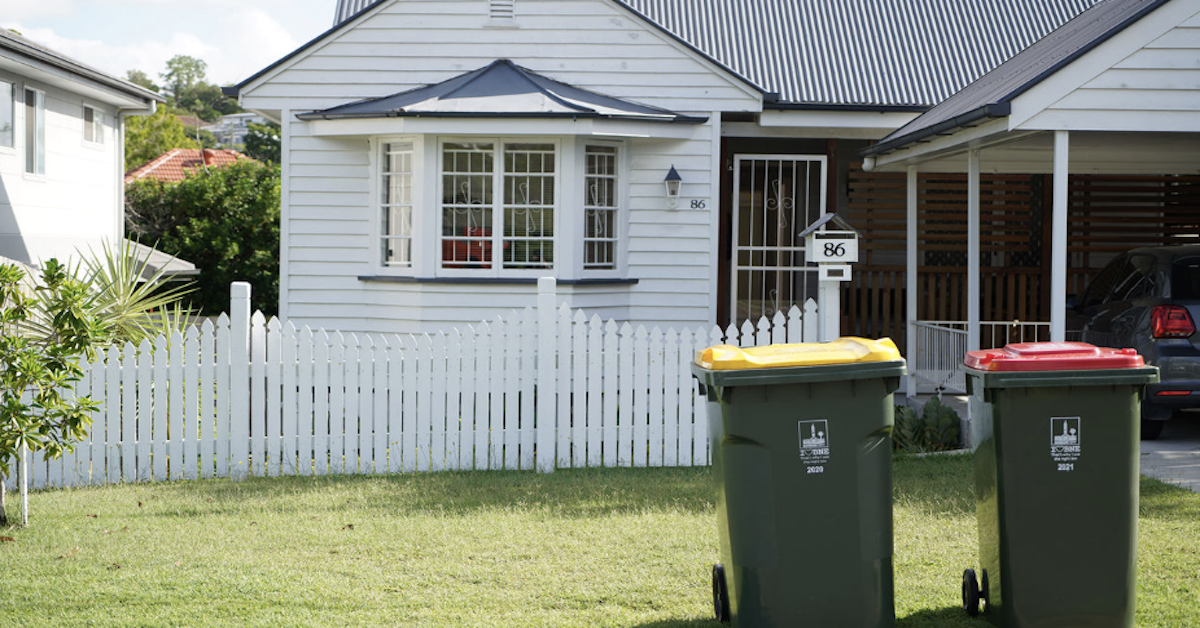
Missed bin pickups in Wavell Heights have become increasingly unpredictable since it was publicly acknowledged that collection standards have slipped and services need to be improved.


LM Adrian Schrinner acknowledged during the very first session of the year that recent collection performance was not meeting expectations and said Council would use the options available under its contract to drive improvement. 

A Suburb-Level Example During High-Pressure Weeks

When collections are missed, the impact is felt quickly on a quiet residential street. Residents have told concerned agencies and media outlets that a skipped service can leave families storing extra rubbish at home, or placing full bins back out and hoping the truck returns. People also want to know when to expect a follow-up run, especially if waste is left out for days.

Citywide complaint numbers add context to the local frustration. A report in 2025 stated that Council was contacted 12,000 times about missed bin collections in the first five months of 2025, showing how often residents felt they had to chase a basic service.

Temporary Waste Sites Show How Disruptions Can Spill Into Daily Life

During the severe weather and clean-up period, a Wavell Heights location was listed for temporary waste support. However, the Wavell Community Hall carpark at Edinburgh Castle Road is one of the sites linked to missed services and access problems in parts of Brisbane.

Brisbane’s March 2025 severe weather event recovery updates outline how disruptions can affect day-to-day services, particularly when roads are blocked, and waste volumes climb. For residents, the main concern is that while a missed collection is understandable during extreme weather, follow-up must be clear and timely.

Photo Credit: BCC

How To Report a Missed Bin in Wavell Heights

Council guidance says residents can log a missed service after the normal collection window, using its online Report a bin problem form. The bin collection advice says missed red-lid bins can be reported after 4.30pm on collection day, while missed yellow or green bins must be reported within two working days to trigger a response.


Residents say the system works best when paired with clear answers. They want a simple message when a street is missed, a clear plan for the makeup run, and fewer duplicate reports on the same issue.

Published 4-Feb-2026